
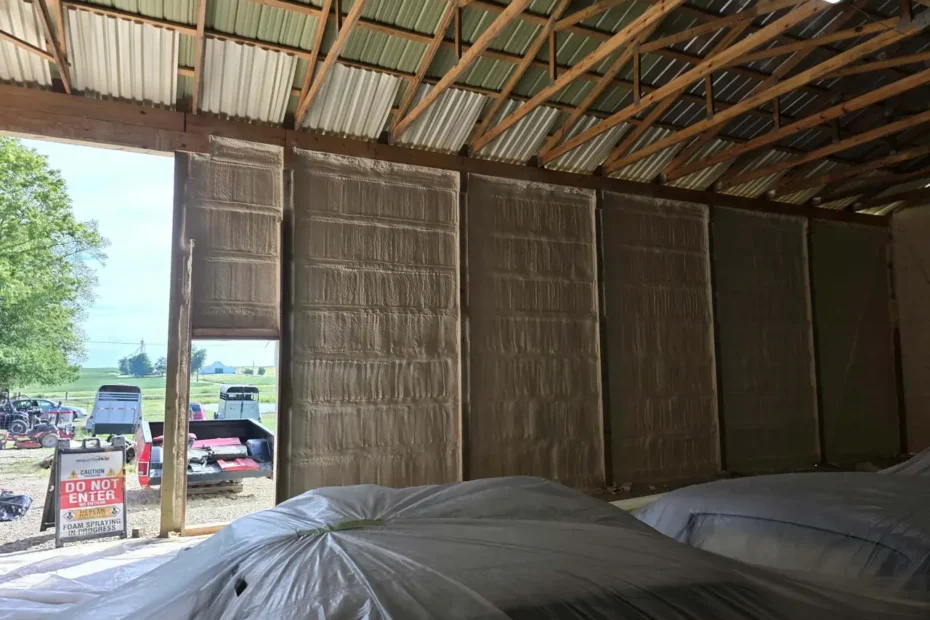
Building a new home, garage, pole barn, or commercial space involves a lot of moving parts. Framers, electricians, plumbers, HVAC contractors, insulation installers, and drywall crews all have work to complete, often within a tight construction schedule.
With so many trades involved, it’s easy for insulation to become something that gets scheduled at the last minute.
But when should insulation be installed during new construction?
In most projects, insulation is installed after framing and the necessary electrical, plumbing, and HVAC rough-ins are complete, once required inspections have been approved, and before drywall or other interior finishes are installed.
However, the insulation contractor should be involved well before that point.
Planning ahead helps avoid scheduling conflicts, unnecessary delays, and situations where completed insulation needs to be disturbed because another trade still has work to finish.
Where Insulation Fits in the New Construction Timeline
Every construction project is different, but the general sequence for a typical new home looks something like this:
- Framing: The walls, floors, roof, and other structural components are constructed.
- Mechanical rough-ins: Electricians, plumbers, and HVAC contractors install wiring, piping, ductwork, and other components that need to be in place before walls are closed.
- Required rough-in inspections: The appropriate building inspections are completed and approved.
- Insulation and air sealing: The insulation contractor completes the agreed-upon work in the accessible areas.
- Insulation inspection, if required: The installation is inspected before being concealed.
- Drywall and interior finishes: Once the necessary approvals and other requirements are satisfied, the project moves toward closing the walls.
This is a general sequence, not a universal schedule. Some insulation and air-sealing work happens earlier, and certain construction assemblies require a different order.
For example, exterior continuous insulation may be installed during exterior enclosure work, while foundation insulation may need to be completed before concrete is poured or areas are backfilled.
The important part is making sure insulation is included in the construction plan from the beginning.
Why You Should Contact Your Insulation Contractor Early
One of the biggest scheduling mistakes in new construction is waiting until the building is almost ready for drywall before contacting an insulation company.
By that point, the general contractor may already have the drywall crew scheduled, other trades may still be finishing their work, and there may be little flexibility if something needs attention.
Getting an insulation contractor involved earlier allows time to:
- Review the building plans and proposed insulation areas
- Discuss insulation materials and R-value requirements
- Identify areas that may need special preparation or access
- Coordinate with the electrical, plumbing, and HVAC contractors
- Prepare an estimate and establish the scope of work
- Order or reserve necessary materials
- Schedule an installation window that fits the construction timeline
For builders managing several projects at once, early communication can also make it easier to coordinate crews and reduce last-minute scheduling changes.
The best time to request an insulation estimate is before you’re ready for installation—not the day before drywall is scheduled.
What Needs to Be Finished Before Insulation Begins?
Before insulation is installed, the building needs to be ready for the specific type of work being performed.
Framing should be sufficiently complete
The insulation contractor needs access to the wall cavities, roof assemblies, floors, and other areas included in the project.
Incomplete framing or last-minute structural changes can affect where insulation needs to be installed.
Electrical and plumbing rough-ins should be complete
Electrical wiring, outlet boxes, plumbing lines, and other components are typically installed before cavity insulation.
If these trades return afterward to make changes, they may need to cut through or remove insulation that has already been installed.
That can create additional work and may affect the continuity of the insulation or air barrier.
HVAC rough-ins should be coordinated
Ductwork, ventilation components, and mechanical penetrations can affect insulation placement and air sealing.
The insulation contractor should understand where these systems will be located and whether any areas require special treatment.
Required inspections should be approved
Many construction projects require inspections before insulation can conceal framing, wiring, plumbing, or other components.
The general contractor or property owner should confirm which inspections are required and when they must occur.
Insulation should not cover work that still needs to remain visible for inspection.
The work area should be ready
Depending on the insulation system, the building may need to meet specific requirements for access, cleanliness, dryness, temperature, ventilation, or other installation conditions.
For spray foam projects, substrate conditions and manufacturer application requirements are particularly important.
A contractor may need to postpone work if conditions are unsuitable for the specified product.
Why Coordination Between Trades Matters
An insulation installation can be scheduled correctly and still run into problems if the other trades aren’t ready.
For example, imagine an insulation crew arriving at a new construction home only to discover that an electrician still needs to run wiring through several exterior walls.
Or the insulation is installed as planned, but the HVAC contractor later needs to add a duct or penetration through an insulated area.
In either situation, the project may require additional coordination, repair work, or a return visit.
These issues don’t necessarily mean anyone made a mistake. Construction schedules change, and unexpected situations happen.
But communication between the general contractor, insulation installer, and other trades can reduce the likelihood of unnecessary delays.
Before confirming an installation date, it’s worth asking:
- Have all necessary rough-ins been completed?
- Are the required inspections approved?
- Will any trades need access to the areas being insulated afterward?
- Are there outstanding changes to the plans?
- Is the building ready for the selected insulation product?
- Has enough time been allowed for installation, any required curing or ventilation, and inspections before drywall?
A few conversations before installation can save considerably more time later.
Does Spray Foam Insulation Require Different Scheduling?
Spray foam insulation may involve additional considerations compared with fiberglass batts or blown-in insulation.
Professional spray foam installation requires specialized equipment and appropriate application conditions.
Depending on the product and project, the contractor may need to account for:
- Surface preparation and substrate conditions
- Temperature and moisture requirements
- Protection of surrounding materials and equipment
- Ventilation during installation
- Manufacturer-specified re-entry and re-occupancy periods
- Required inspections and protective barriers
These considerations should be incorporated into the construction schedule.
For example, drywall should not be scheduled to begin immediately after spray foam installation without confirming that the necessary application, safety, inspection, and other requirements have been satisfied.
The exact timing depends on the product and project.
What Happens If Insulation Is Installed Too Early?
Installing insulation before the building is ready can create avoidable complications.
Other trades may need to disturb finished insulation to complete their work.
Changes to wiring, plumbing, or framing can require sections of insulation to be removed or repaired.
In some cases, insulation installed before an inspection may need to be uncovered so the inspector can evaluate concealed work.
And if a building isn’t adequately protected from moisture or weather, certain insulation materials or installation conditions may be unsuitable.
This is why scheduling insulation isn’t just about finding an available day on the calendar.
It’s about confirming that the building is actually ready.
What Happens If You Wait Too Long to Schedule Insulation?
Waiting until the last minute can create a different set of problems.
Insulation contractors have existing project commitments, equipment schedules, and crews to coordinate.
A contractor may not be able to accommodate a next-day installation simply because drywall is scheduled for the following morning.
If the insulation work requires multiple days, additional preparation, or inspections, the construction schedule may need to change.
For builders, this can affect several other trades.
For homeowners managing their own new construction projects, it can create unnecessary stress and uncertainty.
The better approach is to communicate early, establish a tentative installation window, and confirm the date once the preceding work is complete.
Who Should Coordinate the Insulation Schedule?
On a project with a general contractor, the general contractor typically coordinates the construction sequence and communicates when the building will be ready for each trade.
On an owner-managed project, the homeowner may be responsible for coordinating those steps.
Either way, the insulation contractor should be kept informed of schedule changes that affect installation readiness.
A good process includes confirming the scope early, discussing the expected timeline, and providing updates as framing, rough-ins, and inspections progress.
Planning Insulation for a New Home, Garage, or Pole Barn?
The appropriate insulation schedule can vary depending on the type of building.
A new home with finished living spaces may require a different approach from a pole barn, detached garage, or commercial structure.
Some buildings use spray foam, others use fiberglass or blown-in insulation, and some projects benefit from combining materials.
The building’s intended use, construction details, and insulation requirements should guide the installation plan.
At Insulation Hub, we work with homeowners, builders, and contractors throughout Indiana and West Central Ohio on new construction insulation projects.
Our team can help review the insulation scope and coordinate installation timing with the other work happening on-site.
Frequently Asked Questions
When should insulation be installed during new construction?
In most new construction projects, cavity insulation is installed after framing, electrical, plumbing, and HVAC rough-ins are complete and required rough-in inspections have been approved, but before drywall is installed.
Should insulation be installed before or after electrical wiring?
Electrical rough-in work is generally completed before wall cavity insulation. This allows wiring and electrical boxes to be installed without disturbing finished insulation.
Can insulation be installed before the building inspection?
It depends on which inspection is required. Work that must remain visible for a framing, electrical, plumbing, or mechanical inspection generally should not be concealed before approval. Insulation itself may also require an inspection before drywall.
How far in advance should I schedule an insulation contractor?
Contact an insulation contractor during the planning or early construction stages rather than waiting until drywall is scheduled. The amount of lead time needed varies with the project scope, materials, season, and contractor availability.
How long after spray foam installation can drywall be installed?
The timing depends on the spray foam product, manufacturer requirements, ventilation, required inspections, and any additional protective materials. Confirm the schedule with the installer rather than assuming drywall can begin immediately.
What if another contractor needs to work after insulation is installed?
Some work may require insulation to be moved, cut, or repaired. Coordinate with the insulation contractor so any affected areas can be restored appropriately before the building is finished.
Can you insulate a new construction home in winter?
Yes, certain insulation systems can be installed during winter, provided the product-specific conditions and building requirements are met. Spray foam installation may require additional attention to substrate temperature and other conditions.
Schedule Your New Construction Insulation With Insulation Hub
Insulation installation is an important part of the construction process, and getting the timing right helps keep the project moving.
Whether you’re building a new home, finishing a garage, or constructing a pole barn, it’s worth discussing insulation before the walls are ready to close.
Planning a new construction project in Indiana or West Central Ohio? Call Insulation Hub at 317-385-5456 to discuss your insulation needs and installation timeline.