
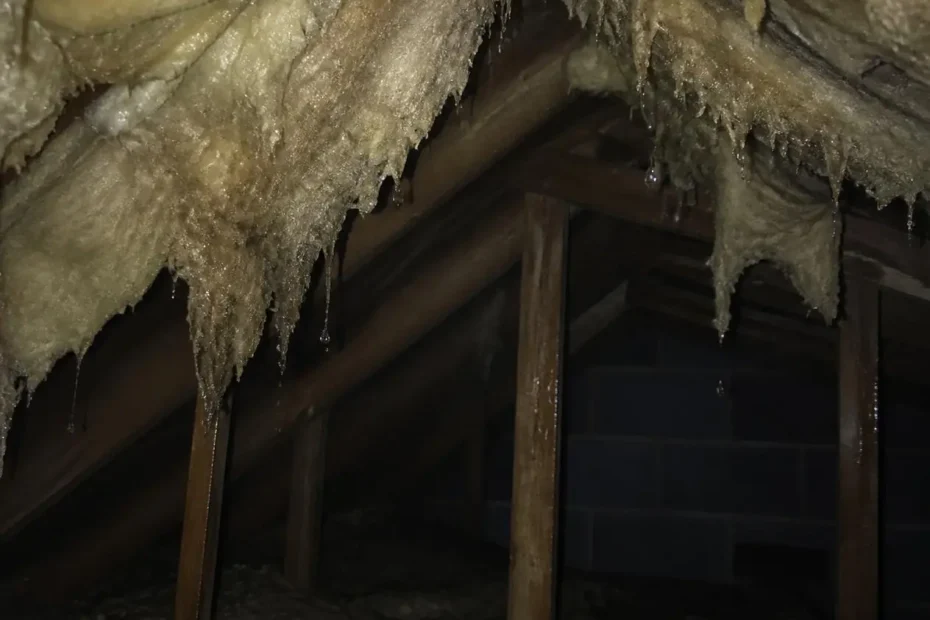
Indiana has seen an extraordinary amount of rain recently, leaving many homeowners dealing with flooding, roof leaks, standing water and other moisture-related problems.
From August 11 through August 17, repeated rounds of thunderstorms brought heavy rain across Indiana. According to the National Weather Service, some areas of central Indiana received more than a foot of rainfall, resulting in flooding, water rescues, washed-out roads and property damage. Parts of northern and east-central Indiana also received more than 10 inches of rain during the storms.
For homeowners, the concern doesn’t always end when the rain stops or the visible water disappears.
Water can make its way into attics, walls, crawl spaces and other insulated areas of a home. If insulation has been exposed to significant water, simply allowing the surface of the area to dry may not be enough.
Here’s what Indiana homeowners should know about wet insulation, water damage and when insulation removal may be necessary after heavy rain or flooding
How Can Heavy Rain Affect Your Home’s Insulation?
Insulation isn’t normally exposed directly to rain. Instead, periods of extreme weather can expose or worsen other problems with a home that allow water to reach insulated areas.
Water may reach insulation through:
- Roof or flashing leaks
- Storm damage to roofing or siding
- Water entering around vents or other roof penetrations
- Flooded basements or crawl spaces
- Foundation water intrusion
- Wind-driven rain entering wall cavities
- Overflowing or overwhelmed drainage systems
Sometimes the source is obvious. You might see water coming through the ceiling or find standing water in a basement.
Other times, the damage can be harder to spot, especially when insulation is located behind drywall, underneath flooring or deep within an attic or crawl space.
What Happens When Fiberglass or Cellulose Insulation Gets Wet?
When significant amounts of water reach insulation, the bigger issue isn’t simply whether the insulation feels wet today. The entire affected area needs to be able to dry properly, and water-damaged materials may need to be removed.
The U.S. Environmental Protection Agency recommends addressing water-damaged areas quickly and notes that drying within approximately 24 to 48 hours can help prevent mold growth. EPA water-damage guidance specifically recommends discarding and replacing water-damaged cellulose and fiberglass insulation.
That doesn’t mean every home that experienced heavy rain suddenly needs its insulation removed.
The important question is:
Did water actually reach your insulation, and if so, how extensive is the damage?
Signs Your Insulation May Have Been Affected by Recent Rain
After a major rain event, it’s worth checking areas of your home that may have been exposed to water.
Watch for signs such as:
- New water stains on ceilings or walls
- Evidence of a roof leak
- Wet, damp or matted attic insulation
- Sagging insulation
- Standing water in a crawl space
- Water entering a basement
- Damp walls or ceilings
- Musty odors that weren’t present before
- Visible moisture around attic vents, chimneys or roof penetrations
- Insulation that appears discolored or compressed
Even if you don’t see standing water anymore, evidence of a leak shouldn’t be ignored.
The EPA notes that moisture problems can sometimes be hidden in areas such as walls, ceilings and other concealed spaces.
When Does Wet Insulation Need to Be Removed?
Whether insulation needs to be removed depends on the type and extent of the water exposure.
Insulation removal may be necessary when:
Insulation Has Been Saturated
If fiberglass or cellulose insulation has absorbed a significant amount of water, removal may be the appropriate next step.
Floodwater Reached the Insulation
Flooding can expose building materials to contaminants in addition to moisture. Water-damaged insulation may need to be removed as part of the cleanup process.
Insulation Has Remained Wet
The longer building materials remain wet, the greater the concern becomes. EPA guidance emphasizes quickly drying water-damaged areas and materials to help reduce the potential for mold growth.
The Insulation Is Matted, Compressed or Damaged
Insulation that has physically deteriorated as a result of water exposure may no longer be something you simply want to leave in place and cover up.
Insulation Must Be Removed to Access the Area Below It
Sometimes insulation removal is necessary so the underlying wood, drywall or other building materials can be inspected, dried or repaired.
Fix the Water Problem Before Replacing the Insulation
This is one of the most important parts of the process.
Removing damaged insulation doesn’t fix the reason it got wet.
If a leaking roof, foundation issue, drainage problem or another source of water intrusion caused the damage, that problem should be addressed before new insulation is installed.
Otherwise, new insulation could eventually be exposed to the same problem.
Depending on the source of the water, that may mean working with a roofer, restoration contractor, waterproofing company, plumber or another appropriate professional before the area is reinsulated.
Don’t Assume Your Insulation Is Fine Just Because the Water Is Gone
After several days of heavy rain, homeowners understandably focus first on the most visible problems, standing water, roof damage, fallen trees or water coming into the home.
But once those immediate problems are under control, it’s worth thinking about what happened inside the areas you can’t easily see.
If water entered your attic, walls, basement or crawl space, insulation may have been affected even after visible surfaces begin to dry.
Finding the problem now can help you determine what needs to be removed, what can remain and what should happen before the area is reinsulated.
Concerned About Wet or Water-Damaged Insulation in Your Indiana Home?
If your home experienced flooding, a roof leak or water intrusion during Indiana’s recent heavy rain, Insulation Hub can help with insulation removal.
Our team can remove damaged or compromised insulation from affected areas so necessary repairs and drying can take place before the space is properly reinsulated.
Whether you’re dealing with water-damaged attic insulation, fiberglass, cellulose or insulation in another part of your home, we’ll help you determine the right next step.
Don’t cover up water-damaged insulation and hope the problem disappears.
Contact Insulation Hub today to learn more about professional insulation removal in Indiana and schedule an evaluation of your home’s insulation.