
If your attic feels like an oven in the summer or an icebox in the winter, the problem might be more than insulation on the attic floor. It often starts with the roof deck itself.
Spray foaming the roof deck creates a continuous thermal barrier that transforms your attic from an unconditioned space into a protective shield for the entire home.
At Insulation Hub, we specialize in spray foam insulation systems that seal air leaks at the source and make your whole home feel balanced, comfortable, and efficient year-round.
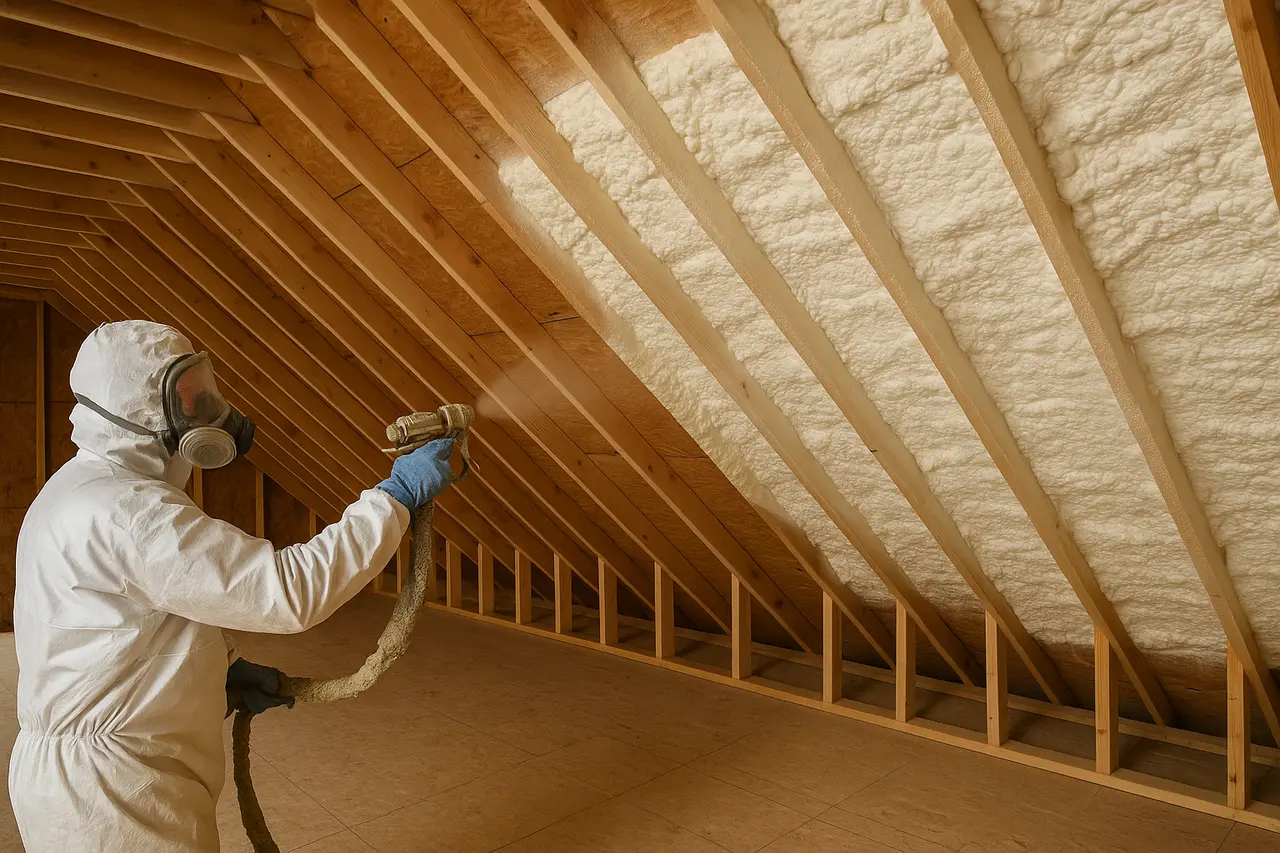
What Is a Spray-Foamed Roof Deck?
A roof deck is the surface just under your roofing materials. In traditional homes, insulation sits on the attic floor, leaving the attic space itself uninsulated and exposed to extreme temperatures.
When you spray foam the roof deck instead, you bring the attic inside your home’s conditioned envelope. That means the space stays closer to indoor temperatures all year long.
This approach is sometimes called a “conditioned attic system.”
Benefits of Spray Foaming the Roof Deck
1. Consistent Temperatures Throughout the Home
No more rooms that are hot in summer and cold in winter. By stopping air movement at the roofline, conditioned air stays where it belongs.
2. Energy Savings All Year
A sealed roof deck reduces the amount of air your HVAC system has to heat or cool, which can cut energy bills by 20 percent or more.
3. Protects Ductwork and Stored Items
If your HVAC ducts or storage are in the attic, they stay within a temperature-controlled zone. This helps your system run more efficiently and keeps stored items in better condition.
4. Reduces Moisture and Ice Dam Problems
Sealing the roof deck helps prevent warm air from escaping and melting snow unevenly, which is a major cause of ice dams on Indiana homes.
5. Quieter, Cleaner Indoor Air
Spray foam also blocks outdoor dust, allergens, and noise, improving overall indoor air quality and comfort.
Open Cell or Closed Cell? It Depends on the Roof
- Open-cell foam is typically used for interior roof decks. It provides excellent air sealing and sound absorption while allowing minor moisture permeability.
- Closed-cell foam adds strength and moisture resistance, making it ideal for certain roof types, high-humidity areas, or metal buildings.
Your installer can help determine which type fits your home’s structure and ventilation plan.
Common Misconception: “Won’t My Roof Need to Vent?”
Traditional attics are vented, but once you insulate the roof deck, the attic becomes unvented and conditioned by design.
When done correctly, spray foaming the roof deck does not trap moisture—it controls it by keeping interior temperatures stable and sealing off humid outside air.
Proper installation and moisture management are key, which is why working with an experienced team like Insulation Hub matters.
Perfect for New Builds and Retrofits
Whether you are building a new home or upgrading an older one, roof deck spray foam can be integrated easily during construction or applied in existing homes for instant comfort improvements.
Start at the Top
Insulating your roof deck is one of the smartest ways to make your home more efficient from the top down.
It locks in comfort, lowers energy costs, and extends the life of your roof system.
Ready to learn if roof deck spray foam is right for your home?
Contact Insulation Hub today for a free quote or consultation.