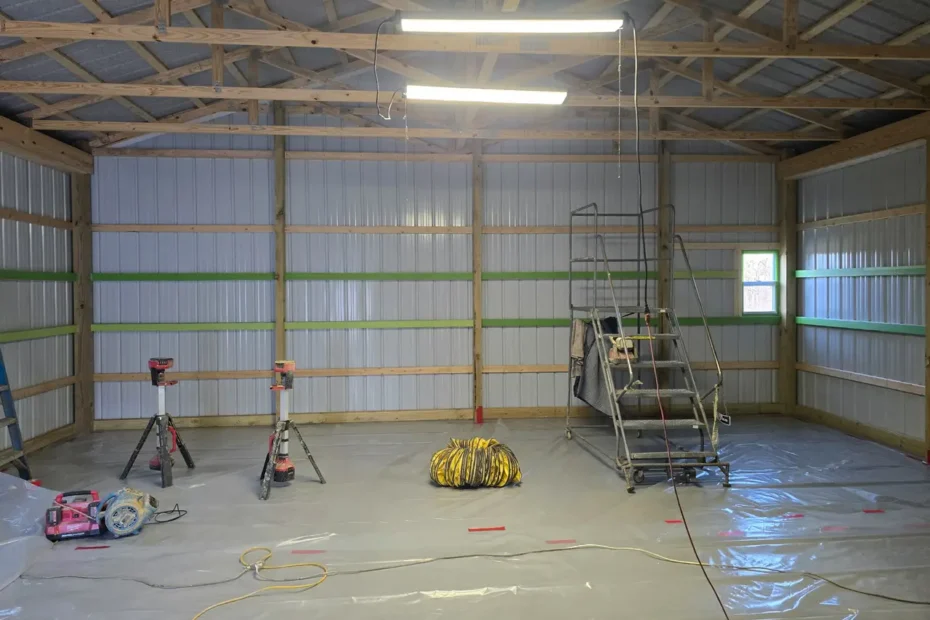
If you’ve walked into your pole barn on a humid summer morning and noticed water droplets forming on the ceiling, walls, or metal roof panels, you’re not alone.
Many pole barn owners assume they have a roof leak. Others think the problem will disappear on its own once the weather changes. In reality, what you’re seeing is usually condensation and if left unaddressed, it can lead to rust, mold, damaged equipment, and an uncomfortable building.
Understanding why your pole barn is “sweating” is the first step toward fixing the problem.
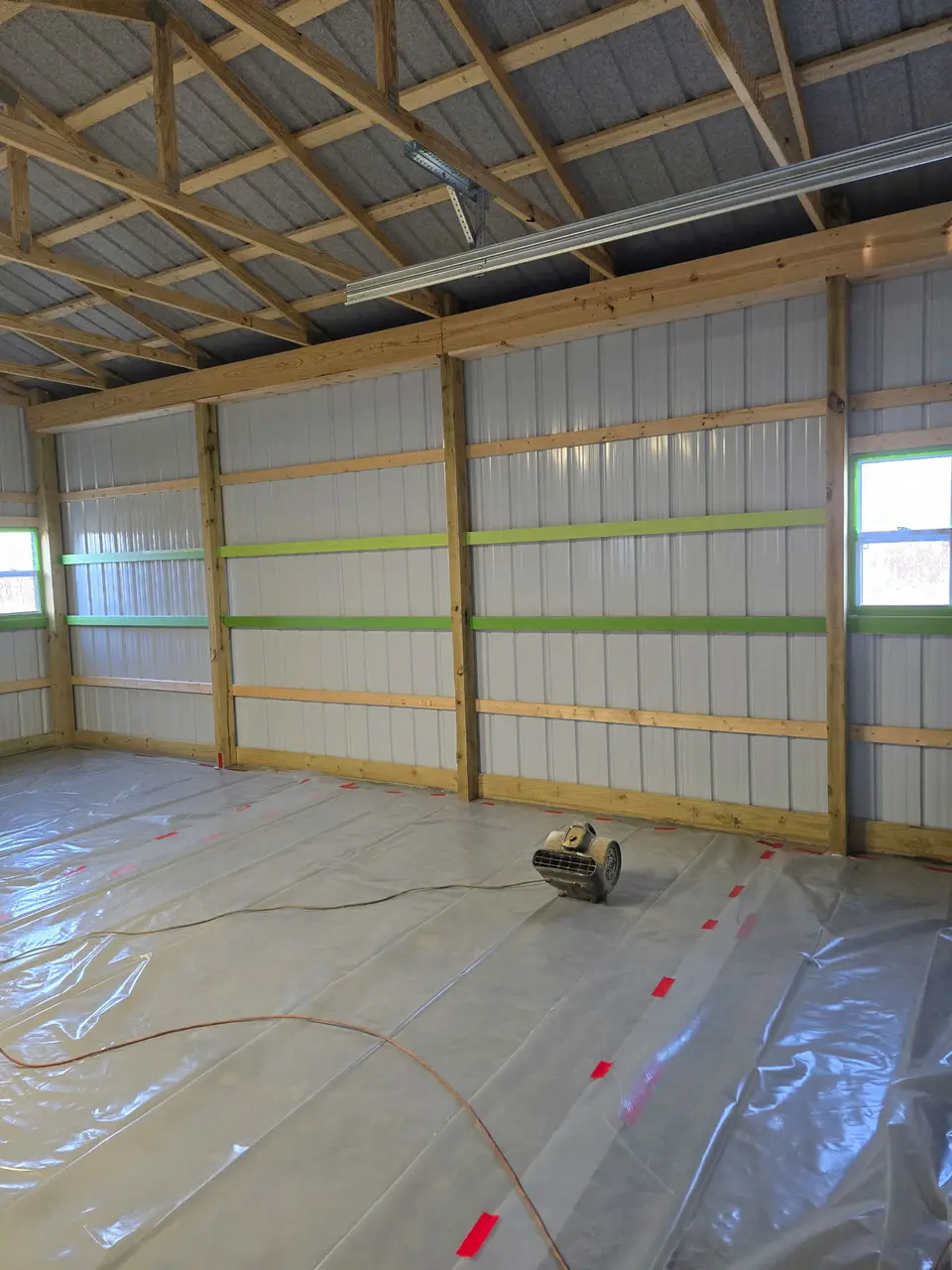
What Causes a Pole Barn to Sweat?
Pole barn sweating occurs when warm, humid air comes into contact with a cooler surface inside the building.
Metal is an excellent conductor of temperature. During certain weather conditions, the metal roof or wall panels can become cooler than the surrounding air. When humid air touches those surfaces, moisture condenses into water droplets.
Think about a cold glass of water on a hot summer day. Water forms on the outside of the glass even though the glass isn’t leaking. The same thing happens inside many pole barns.
Why Summer Can Be Worse Than Winter
Many people associate condensation with winter, but summer can be just as problematic.
During Midwest summers, humidity levels can be extremely high. Warm, moisture-laden air enters the building through open doors, vents, and gaps in the structure.
When that humid air encounters cooler metal surfaces, condensation forms.
This is especially common in:
- Equipment storage buildings
- Workshops
- Agricultural buildings
- Pole barns with concrete floors
- Buildings located near lakes, ponds, or wooded areas
Signs Condensation Is Becoming a Problem
Some condensation may seem harmless at first, but over time it can create significant issues.
Common warning signs include:
- Water dripping from the ceiling
- Rust forming on metal panels
- Wet insulation
- Mold growth
- Damp concrete floors
- Moisture damage to stored items
- Musty odors
If you’re seeing any of these signs, the problem is likely larger than a simple roof leak.
Why Ventilation Alone Doesn’t Always Solve the Problem
Many building owners try adding vents first.
Ventilation can help reduce moisture in some situations, but it doesn’t always solve the root cause.
The challenge is that ventilation introduces more outside air. During humid weather, that outside air often contains additional moisture.
Without a complete moisture-control strategy, ventilation alone may not eliminate condensation.
How Insulation Helps Control Pole Barn Condensation
Insulation works by creating a thermal barrier between the interior environment and the metal surfaces.
When properly installed, insulation helps keep interior surfaces from reaching temperatures that trigger condensation.
Several insulation options may be appropriate depending on how the building is used:
Closed-Cell Spray Foam
Closed-cell spray foam is one of the most effective solutions for condensation control.
Benefits include:
- Air sealing
- Moisture resistance
- High R-value
- Added structural strength
- Long-term durability
Open-Cell Spray Foam
Open-cell spray foam may be appropriate in certain applications where moisture management and budget considerations align.
Fiberglass Systems
Fiberglass insulation can work well when paired with proper vapor barriers and installation techniques.
However, fiberglass alone may not prevent condensation if air movement and moisture issues remain unaddressed.
The Cost of Ignoring Condensation
Condensation rarely gets better on its own.
Over time, excess moisture can contribute to:
- Rusted metal panels
- Mold growth
- Damaged equipment
- Wood rot
- Reduced insulation performance
- Higher maintenance costs
Addressing the issue early is often far less expensive than dealing with long-term damage.
Final Thoughts
A sweating pole barn isn’t usually a roofing problem—it’s often a moisture and condensation problem.
The good news is that it can be addressed with the right combination of insulation, air sealing, and moisture management.
If your pole barn, workshop, or agricultural building is experiencing condensation issues, a professional assessment can help identify the best long-term solution.
FAQs
Why is water dripping from my pole barn ceiling?
Most often, it’s condensation forming when humid air contacts cooler metal surfaces.
Will ventilation stop condensation?
Sometimes, but not always. Ventilation alone may not solve the underlying moisture problem.
Is spray foam good for pole barns?
Yes. Spray foam is one of the most effective ways to reduce condensation while improving energy efficiency.
Can condensation damage a metal building?
Absolutely. Condensation can lead to rust, mold, damaged equipment, and structural deterioration over time.
How do I stop my barn from sweating?
The best solution depends on the building, but insulation and moisture control are often key components.