
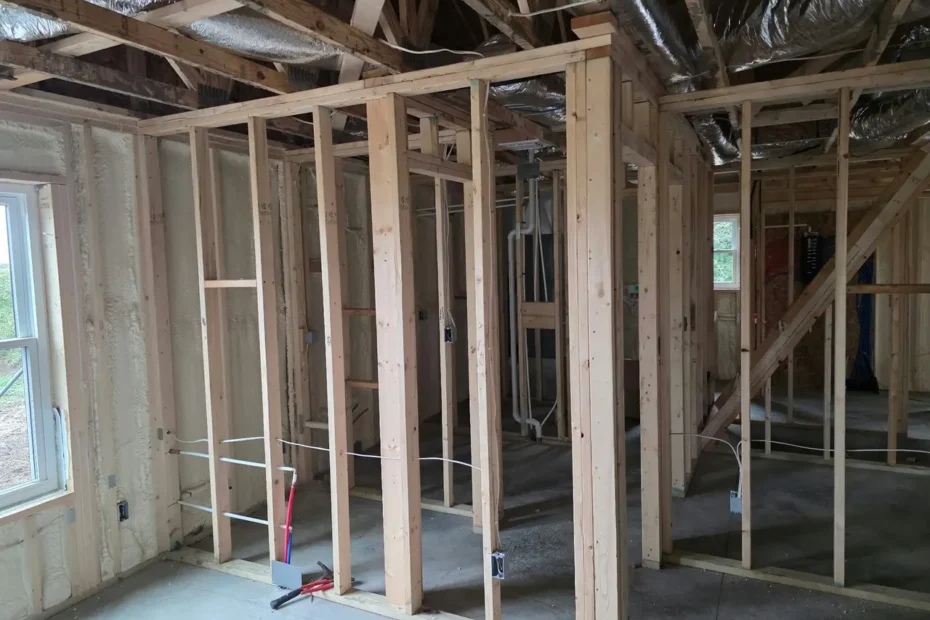
If your basement is cold, there’s an obvious solution:
Add insulation.
But where?
Should insulation go between the floor joists in the basement ceiling?
Or should the foundation walls be insulated instead?
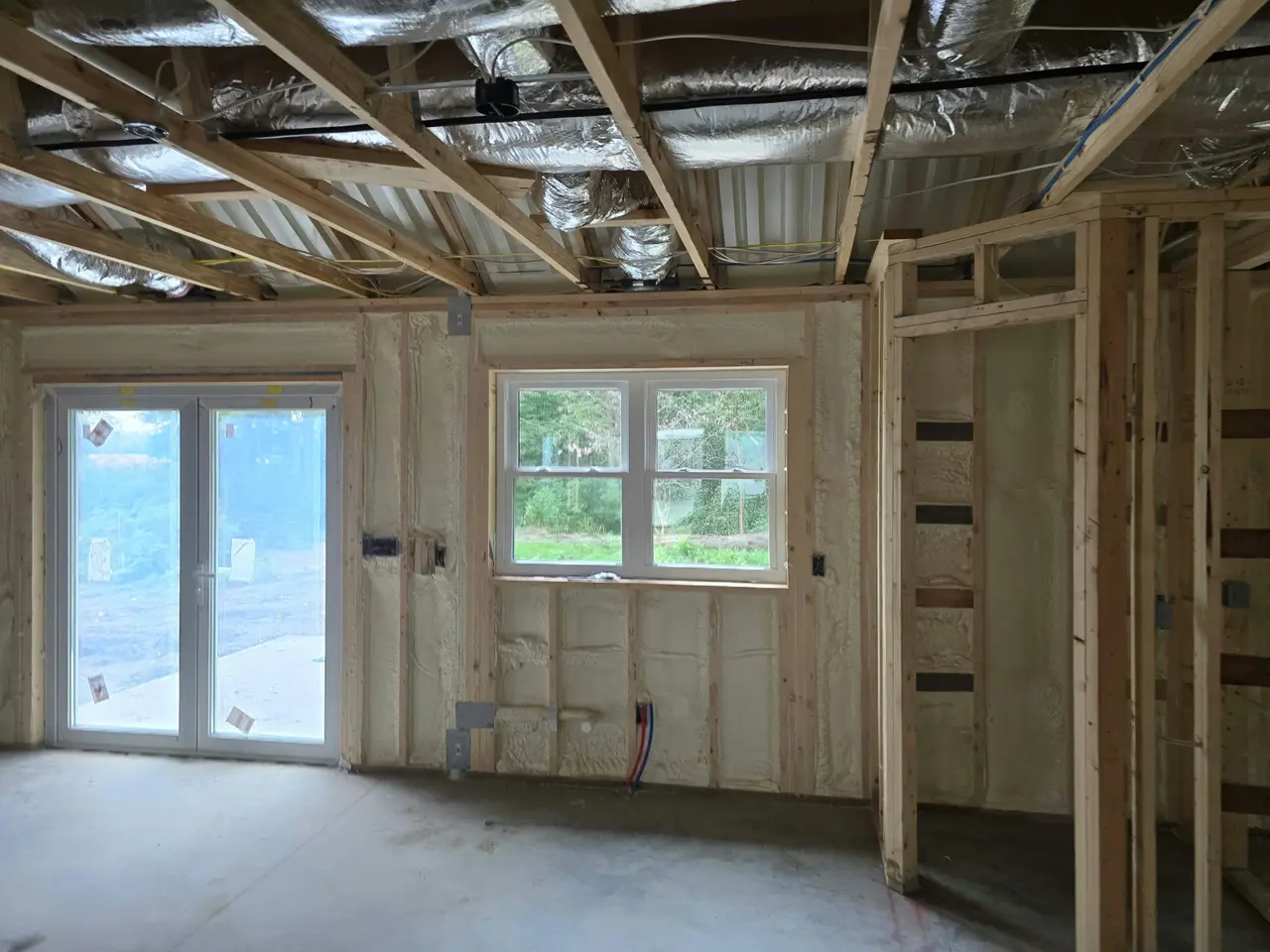
The answer matters because those two approaches accomplish different things.
Rather than starting with the insulation material, start with a bigger question:
Do you want the basement to be part of the conditioned space of the house or separated from it?
What Happens When You Insulate the Basement Ceiling?
Insulating the basement ceiling essentially creates a thermal separation between the basement and the living space above it.
That can make sense in certain situations where the basement is intended to remain outside the conditioned portion of the home.
But there’s a tradeoff.
If you thermally separate the basement from upstairs, the basement itself may remain colder.
That becomes particularly important when the basement contains:
- Plumbing
- HVAC equipment
- Ductwork
- Laundry
- Utilities
- Storage
- Finished or potentially finished living space
You need to think about the entire basement—not just whether the first-floor floors feel cold.
What Happens When You Insulate Basement Walls?
Insulating the foundation walls can bring the basement more fully inside the home’s thermal envelope when the entire assembly is designed appropriately.
Instead of trying to isolate the basement from the first floor, you’re creating a thermal boundary around the basement itself.
That can make sense when the basement is:
- Finished
- Heated or conditioned
- Used regularly
- Planned for future living space
- Home to mechanical equipment or ductwork
But foundation insulation requires more than simply attaching insulation to a wall.
Moisture has to be considered first.
Check for Water and Moisture Before Insulating
Basements are below grade, which means moisture deserves special attention.
Before covering foundation walls, investigate signs such as:
- Water intrusion
- Damp foundation walls
- Efflorescence
- Musty odors
- Visible mold
- Cracks or drainage problems
- High humidity
Insulation shouldn’t be used to hide a moisture problem.
If water is entering the basement, the source should be addressed before an insulation system covers the area and potentially makes the problem harder to see.
Don’t Forget the Rim Joist
There’s another part of the basement that often deserves attention: the rim joist.
This is the area where the floor framing meets the exterior perimeter of the house.
Because of the number of joints and penetrations in this area, rim joists can be a significant source of air leakage.
A homeowner might assume cold basement conditions mean the entire ceiling needs insulation when a meaningful part of the problem is occurring around the perimeter.
Again, that’s why diagnosis should come before simply choosing an insulation location.
What If Your Floors Upstairs Are Cold?
Cold floors are one reason homeowners consider basement-ceiling insulation.
But a cold floor doesn’t automatically mean the ceiling needs to be filled with insulation.
The cause could involve:
- Cold basement temperatures
- Rim-joist air leakage
- Foundation-wall heat loss
- Crawl-space conditions
- Air leakage elsewhere
- Missing insulation in specific areas
If the basement is meant to remain part of the conditioned home, insulating the ceiling could actually put the thermal boundary in a place you didn’t intend.
The goal should be to understand why the floor is cold, not simply insulate directly underneath it.
What About an Unfinished Basement?
“Unfinished” doesn’t necessarily mean “unconditioned.”
That’s an important distinction.
A basement can have exposed concrete walls and floor joists while still containing HVAC equipment, ducts, plumbing and other components connected to the conditioned house.
Likewise, a beautifully finished basement can still have significant insulation or moisture problems.
How the space looks isn’t what determines the correct thermal boundary.
How the building is designed and used does.
What If You Plan to Finish the Basement Later?
Tell your insulation contractor.
Future plans matter.
If you’re likely to turn an unfinished basement into a family room, office, bedroom or other living space in a few years, that may influence what makes sense today.
It’s much better to develop an insulation strategy around where the house is going than install something now that conflicts with the future renovation.
Basement Insulation Isn’t Just About R-Value
Basements are a good example of why insulation decisions aren’t simply:
“Where can we put the most insulation?”
A successful assembly needs to consider:
heat + air + moisture.
Where the thermal boundary sits, how air leakage is controlled and how the foundation handles moisture all matter.
That’s particularly important in Indiana and Ohio, where basements experience major seasonal changes in temperature and humidity.
So, Basement Walls or Basement Ceiling?
There isn’t one answer for every house.
If the basement is intentionally outside the conditioned envelope, insulating between it and the living space above may make sense in some situations.
If the basement is conditioned, used as living space or intended to function as part of the house, insulating the foundation walls and addressing perimeter air leakage may be the more appropriate strategy.
The important part is making that decision before simply installing insulation wherever it’s easiest to reach.
Insulation Hub can evaluate your basement, rim joists and surrounding building envelope to determine where insulation and air sealing can actually improve the way the home performs.
Frequently Asked Questions
Is it better to insulate basement walls or the ceiling?
It depends on where the home’s thermal boundary should be. A conditioned basement is generally approached differently from a basement intentionally separated from the conditioned living space.
Will insulating my basement ceiling make my floors warmer?
It may help in certain assemblies, but cold floors can also result from basement temperatures, rim-joist leakage and other building-envelope issues. The underlying cause should be evaluated first.
Should an unfinished basement have insulated walls?
Possibly. An unfinished basement can still be part of the home’s conditioned space. Whether the foundation walls should be insulated depends on moisture, construction, HVAC configuration and how the basement is used.
Should I insulate basement walls if they get wet?
A known water-intrusion problem should be investigated and addressed before covering the area with an insulation system.
Do basement rim joists need insulation?
Rim joists are commonly evaluated because they can be areas of heat transfer and air leakage. The appropriate treatment depends on the assembly and conditions.