
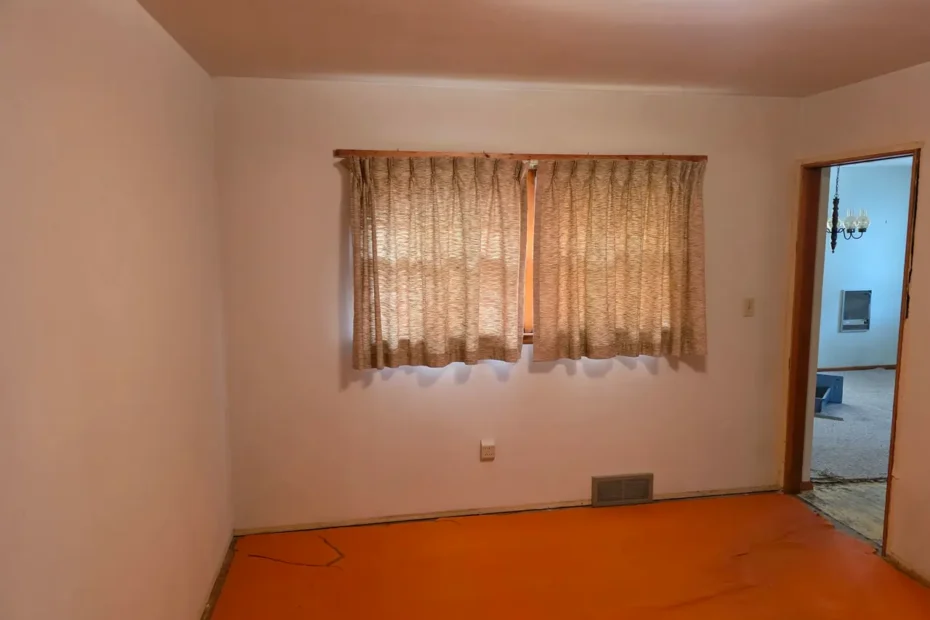
If you own an older home and suspect there isn’t enough insulation in the exterior walls, there’s probably one thing keeping you from doing something about it…
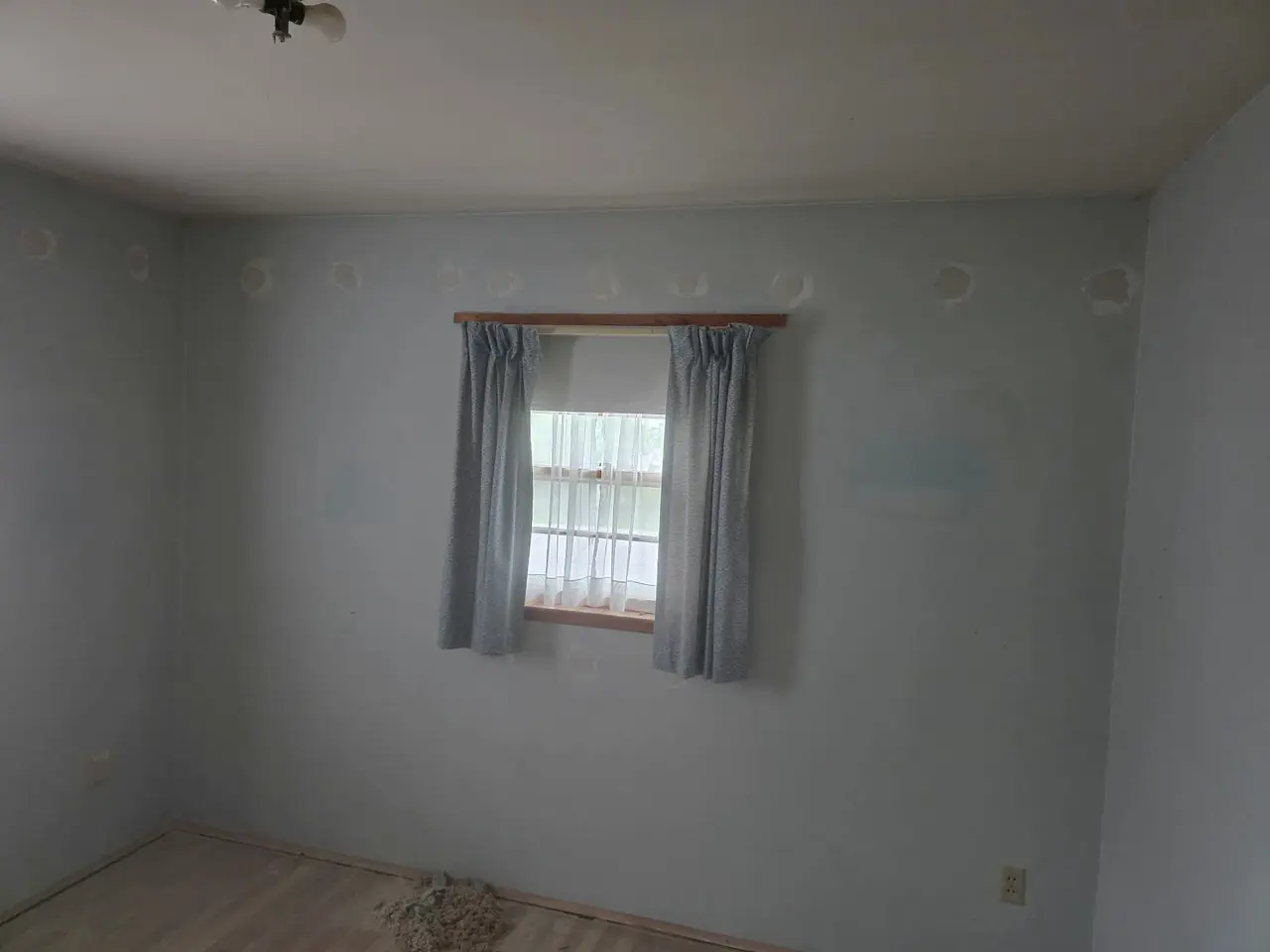
You don’t want to tear apart perfectly good walls.
That’s understandable.
The good news is that in many homes, existing walls can be insulated without removing all of the drywall.
One common approach is known as drill-and-fill insulation. Small access holes are created so insulation can be installed into the wall cavities. Those openings are then plugged and patched.
But whether that’s the right approach for your home depends on what’s already inside the walls, how the house was constructed and what problem you’re actually trying to solve.
How Can Existing Walls Be Insulated?
When a home is being built, insulating the walls is relatively straightforward because the framing is exposed.
Once drywall is installed, those cavities become much harder to reach.
That doesn’t necessarily mean they’re inaccessible.
Depending on the home, an insulation contractor may be able to access the wall cavities from the interior or exterior and install insulation without removing entire sheets of drywall.
At Insulation Hub, we’ve used this approach on existing homes and renovation projects where the walls were already finished.
The goal is to improve the wall assembly without turning an insulation project into a complete remodeling project.
What Is Drill-and-Fill Insulation?
Drill-and-fill is exactly what it sounds like.
Access holes are strategically drilled into the wall so insulation can be installed inside the existing cavities.
Dense-packed cellulose is one material that can be used for this type of retrofit.
Once the cavity has been filled, the access holes are plugged and patched as appropriate for the surface.
The exact installation method depends on the house. Siding, wall construction, existing insulation, interior finishes and accessibility can all affect how the work is approached.
That’s why it’s difficult to tell a homeowner exactly how their walls should be insulated without first seeing the property.
How Do You Know If Your Walls Need More Insulation?
You can’t always tell by looking at them.
Homeowners sometimes start investigating their wall insulation because they’re experiencing:
- Cold exterior walls
- Certain rooms that are difficult to heat or cool
- Drafts
- High heating or cooling costs
- Significant temperature differences between rooms
- An older home with unknown insulation
- Walls that were never insulated during original construction
But those symptoms don’t automatically prove that the wall cavities are empty.
Air leakage, attic insulation, HVAC airflow, windows and other parts of the building can create similar comfort problems.
Before assuming the walls need to be filled, it’s worth figuring out what’s actually happening.
What If There Is Already Insulation Inside the Walls?
This is an important question.
An existing wall cavity isn’t necessarily completely empty or completely insulated.
Older homes in particular may have:
- No insulation
- Older insulation
- Partially filled cavities
- Settled insulation
- Different insulation in different sections of the house
- Renovated additions that were insulated differently from the original structure
Simply adding material without understanding what’s already there isn’t always the best approach.
An inspection can help determine the existing conditions and whether retrofit wall insulation makes sense.
Does the Drywall Get Damaged?
Drill-and-fill does require access holes, so it isn’t completely non-invasive.
That’s different, however, from removing entire walls.
If the walls are accessed from the interior, there will be areas that need to be patched and finished afterward. If access is possible from the exterior, the process will depend on the siding and wall construction.
Your contractor should explain where the walls will be accessed and what the finished condition will look like before work begins.
That’s an important question to ask when comparing insulation estimates.
Is Adding Wall Insulation Always the Best Fix?
No.
And this is where a good inspection matters.
If the actual problem is uncontrolled air leakage from the attic, an under-insulated room over a garage, a crawl space issue or poor HVAC distribution, filling exterior wall cavities may not solve the complaint that prompted the call.
Insulation works as part of a building system.
The goal isn’t to find an empty cavity and fill it simply because we can.
It’s to identify where the building is losing control of heat and air and determine which improvements will actually make sense.
What About Homes That Are Being Renovated?
If you’re already opening walls during a renovation, that’s a different situation.
Exposed framing gives the contractor direct access to the wall cavities and can create opportunities to address insulation and air sealing that would otherwise be difficult to reach.
If you’re planning a major renovation, addition or remodel, it’s worth talking about insulation before the drywall goes back up.
Once everything is finished again, your options may become more limited.
So, Can Your Walls Be Insulated Without Removing the Drywall?
In many homes, yes.
Drill-and-fill and other retrofit approaches can make it possible to improve existing wall insulation without completely gutting the room.
But the right solution depends on:
- How the wall was constructed
- What’s already inside it
- The exterior material
- Accessibility
- Moisture conditions
- The problem you’re trying to solve
If you suspect the walls in your Indiana or Ohio home aren’t properly insulated, Insulation Hub can evaluate the property and determine what options make sense before you start tearing anything apart.
Frequently Asked Questions
Can you add insulation to walls without removing drywall?
In many existing homes, yes. Drill-and-fill techniques can provide access to wall cavities without removing entire sheets of drywall. Whether it’s appropriate depends on the wall construction and existing conditions.
What type of insulation can be added to existing walls?
Dense-packed cellulose is one option commonly used for retrofit wall applications. The appropriate material and installation method depend on the wall assembly and project.
How do you know whether an existing wall has insulation?
Construction history, inspection methods and thermal imaging under appropriate conditions can provide useful information. In some cases, limited physical investigation may be needed to confirm what’s actually inside a cavity.
Does drill-and-fill insulation leave holes in the walls?
Access holes are required and are plugged or patched afterward. Where those holes are created depends on whether the contractor can access the cavities from the interior or exterior.
Will insulating existing walls fix a cold room?
It can help if inadequate wall insulation is contributing to the problem. Cold rooms can also result from air leakage, HVAC issues, attics, floors over garages and other building-envelope deficiencies, so diagnosis should come first.