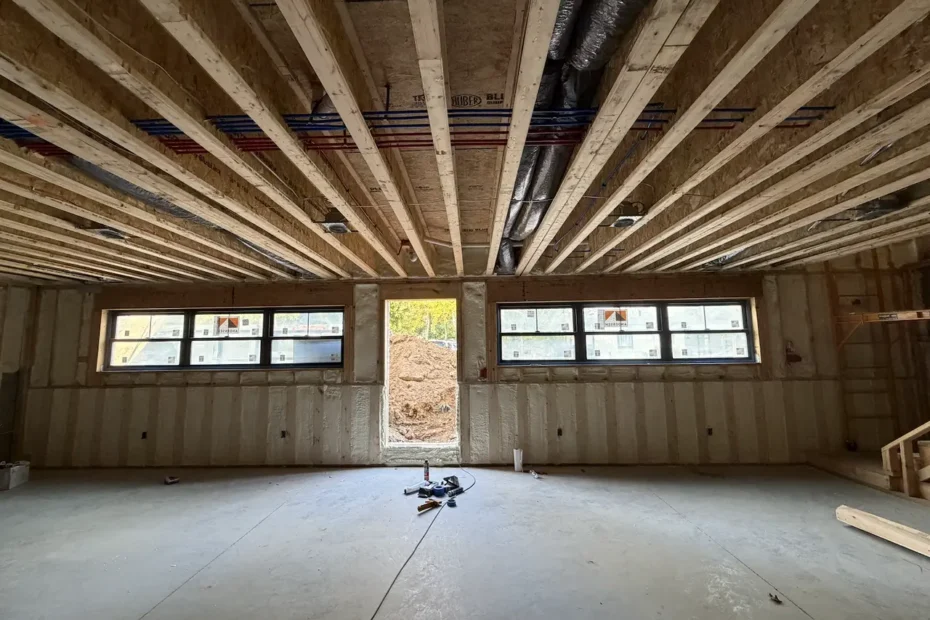
Every summer, Indiana homeowners notice the same thing: the basement gets damp, musty, and uncomfortable right around the time the weather heats up outside. Sometimes it’s just a smell. Sometimes it’s visible condensation on walls, pipes, or the floor. Sometimes it’s full-on water droplets running down the concrete walls and puddling on the floor — even when there’s been no rain and no obvious leak.
If this sounds familiar, you’re not dealing with a plumbing problem or a foundation crack. You’re dealing with physics — and the fix is very different from what most people assume.
Why Summer Is the Problem Season for Basements
It seems backwards. Winter is when you expect moisture problems. But basements are actually most vulnerable to humidity in summer, and here’s why.
Your basement walls and floor are in contact with the ground, which stays at a relatively stable temperature year-round — typically in the 50 to 55 degree range in Indiana. In winter, that cool ground temperature is an asset, because the air outside is cold too. The temperature difference is small and moisture stays put.
In summer, the dynamic flips entirely. Warm outdoor air in Indiana summers carries a lot of moisture — humidity levels regularly hit 70, 80, even 90 percent on hot days. When that warm, humid air enters your basement through windows, doors, vents, gaps around the rim joist, or any other opening, it hits your cool concrete walls and floor. Cool surfaces cause the moisture in warm air to condense — the same way a cold glass of water beads up on the outside on a humid day.
The result is condensation on your basement walls, damp floors, musty air, and often visible mold or mildew growth on walls, stored items, and framing.
The Mistake Most Homeowners Make
The instinctive response to a humid basement is to open the windows on a “nice day” to air it out, or to run a dehumidifier around the clock. The dehumidifier helps manage the symptoms. But opening windows to let “fresh air” into a humid Indiana summer day is actually making the problem significantly worse — you’re introducing more warm, moisture-laden air to condense on those cool surfaces.
The dehumidifier is fighting a battle it can’t win as long as humid air has free access to the basement. Running a dehumidifier continuously in a leaky basement is expensive and never fully solves the problem. You’re removing moisture that keeps getting replaced.
The real fix is stopping the warm, humid air from getting in — and that’s where insulation and air sealing come in.
What Insulation Actually Does for a Humid Basement
The root cause of summer basement humidity isn’t that you need more ventilation. It’s that your basement has cold surfaces (concrete walls and floor) being exposed to warm, humid air. The solution is to either warm up those surfaces or stop the humid air from reaching them. Proper insulation and air sealing does both.
Insulating the rim joist is one of the most impactful steps. The rim joist — the band of wood framing that runs around the perimeter of your basement at the top of the foundation wall — is one of the main entry points for outdoor air. In most existing homes, it’s either uninsulated or stuffed with fiberglass batts that do nothing to stop air movement. Spray foam at the rim joist seals off one of the primary pathways for humid summer air to enter the basement.
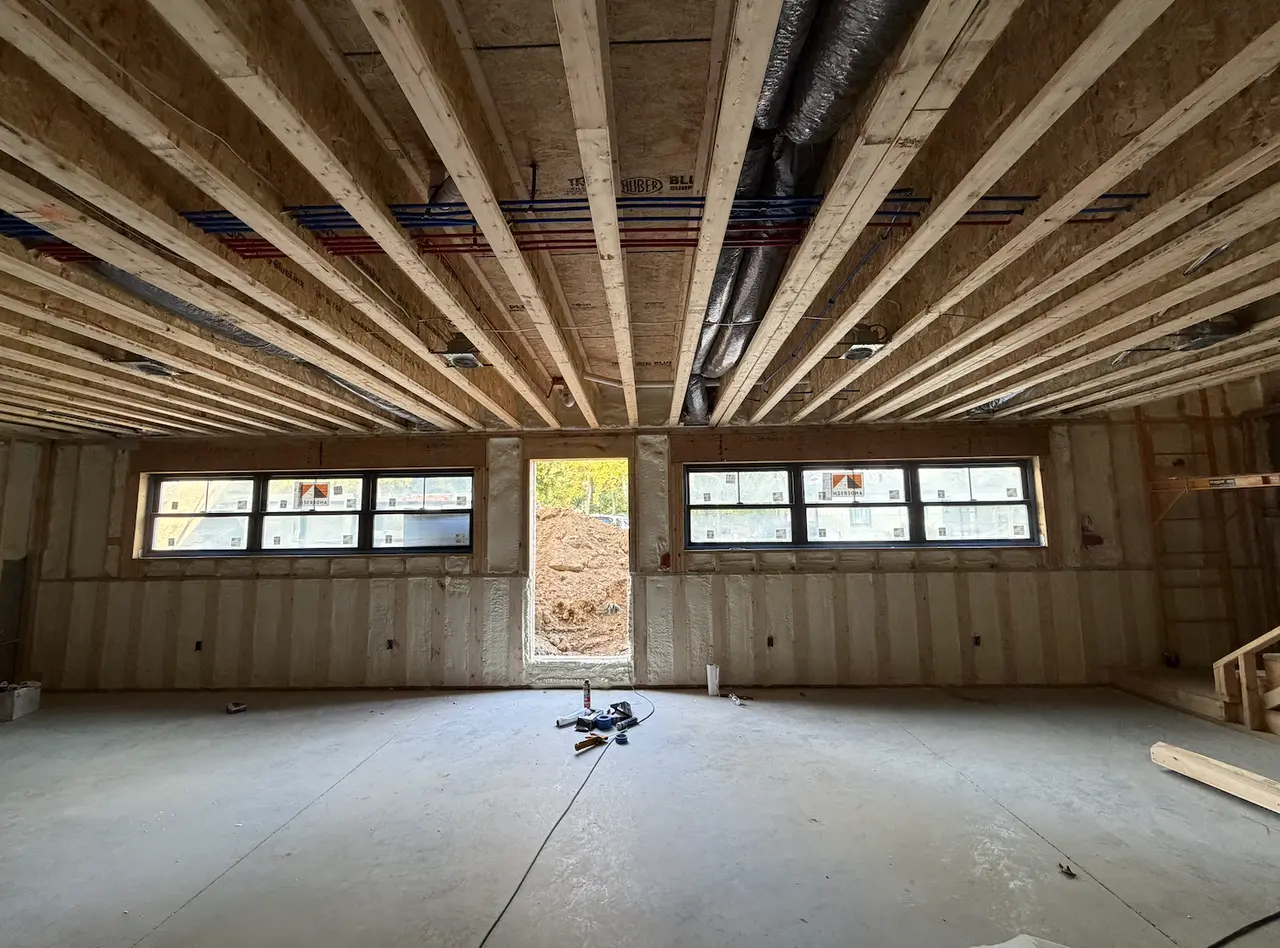
Insulating the basement walls changes the thermal dynamic entirely. When you insulate the inside of a concrete foundation wall — whether with rigid foam board or closed-cell spray foam — you’re putting a warm surface between the cool concrete and the interior air. The concrete stays cold, but the air in the basement no longer contacts it directly. Condensation essentially stops because the dew point is no longer being reached on any exposed interior surface.
Think of it like putting a jacket on the concrete. The concrete itself is still cold, but the surface that your basement air actually touches is now the insulation — which is warm enough to prevent condensation.
Air sealing the basement closes off the entry points for humid outdoor air. This includes the rim joist, any gaps around penetrations (plumbing, electrical, HVAC lines), and transitions between the basement and other unconditioned spaces. Once humid air can’t freely enter, your dehumidifier doesn’t have to work nearly as hard — and in some well-sealed, well-insulated basements, a dehumidifier becomes largely unnecessary.
What About Waterproofing?
It’s worth distinguishing between the two types of basement moisture problems, because they have different solutions.
Condensation is what we’ve been describing — moisture from warm air contacting cool surfaces. It’s a humidity and air control problem. Insulation and air sealing fix it.
Intrusion is water physically coming through the foundation wall or floor due to hydrostatic pressure, a high water table, or drainage problems around the foundation. This shows up as actual water seeping through cracks, water appearing at the base of the wall, or water pushing up through the floor. This is a waterproofing and drainage problem. Insulation does not fix it — in fact, applying insulation over an actively leaking wall will trap water and accelerate rot and mold.
Before insulating a basement, a good contractor will assess which problem you actually have. If there’s any active water intrusion, that needs to be addressed first. If the issue is pure condensation and humidity, insulation and air sealing are the fix.
The Mold and Air Quality Connection
Summer basement humidity isn’t just a comfort issue. Mold grows readily in conditions above 60 percent relative humidity, and basements that experience regular summer condensation often develop mold on walls, wood framing, stored belongings, and HVAC equipment. Because your HVAC system typically draws return air from or near the basement, mold spores in a humid basement can circulate through your entire home.
Homeowners who address basement insulation and air sealing consistently report that the musty smell goes away, stored items stop getting damaged, and the air quality throughout the house improves — not just in the basement. That’s because you’ve eliminated the source rather than masking the symptoms with dehumidifiers and air fresheners.
What to Expect From the Fix
For most Indiana basements experiencing summer condensation and humidity, the primary interventions are closed-cell spray foam at the rim joist and either spray foam or rigid foam insulation on the foundation walls. The rim joist alone often makes a meaningful difference because it’s the largest uncontrolled air entry point in most existing basements.
The work is typically straightforward in an unfinished basement. In a finished basement, access to the rim joist requires some work around the finished wall, but the rim joist can usually be addressed without a full renovation.
If your basement has been damp every summer for years, or you’re dealing with recurring mold, a professional assessment is the right starting point. We can identify whether you’re dealing with condensation, intrusion, or some of both — and give you an honest recommendation on what will actually solve it rather than just managing symptoms.
Insulation Hub serves Indiana and Ohio. If your basement has been making you miserable every July and August, reach out for a free consultation before this summer’s humidity season hits.