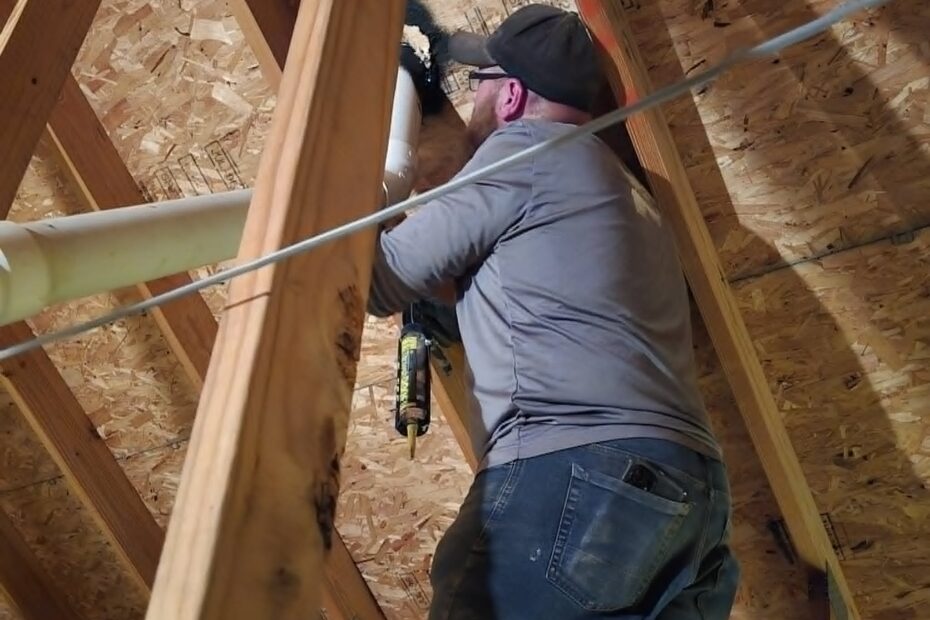
If you’ve been getting quotes for insulation, you’ve probably heard the phrase “air sealing” tossed around. Maybe a contractor mentioned it as an add-on. Maybe you’ve seen it listed separately on an estimate and wondered whether it’s something you actually need or just an upsell.
It’s one of the most misunderstood concepts in home energy efficiency — and getting it wrong is expensive. Here’s what air sealing actually is, why it matters, and how it fits in with insulation.
Air Sealing and Insulation Are Not the Same Thing
Most homeowners assume that adding insulation automatically stops air from moving through their home. That’s the biggest misconception in the industry, and it costs people real money every year.
Insulation slows down heat transfer. It acts like a sweater — it creates thermal resistance, slowing the rate at which heat moves through walls, ceilings, and floors. But insulation is not an air barrier. Most fiberglass batts, cellulose, and even some spray foam products allow air to pass through or around them freely.
Air sealing, on the other hand, physically blocks the gaps, cracks, holes, and penetrations where air moves in and out of your home’s envelope. We’re talking about:
- Gaps around recessed light fixtures in the attic
- Holes where plumbing pipes and electrical wires pass through framing
- The joint where your top plate meets the ceiling drywall
- Gaps around attic hatches and pull-down stairs
- Cracks where the foundation meets the framing (the rim joist area)
- Openings around chimneys, flues, and ductwork
These openings are invisible to the naked eye in a finished home, but when you add them all up, the average house has the equivalent of a window left wide open year-round.
Why Air Movement Is Such a Big Deal
Here’s how to think about it. Imagine stuffing your walls full of the best insulation money can buy, but leaving a one-inch gap under every exterior door. All that insulation does its job — but you’re still losing conditioned air directly to the outdoors because the gap exists.
That’s essentially what happens when a home is insulated but not air-sealed. The warm air you pay to heat rises through gaps in the ceiling into the attic. Cold outdoor air gets pulled in through the basement, rim joists, and wall penetrations to replace it. Your HVAC system runs constantly trying to compensate. Your energy bills stay high. And the rooms that are farthest from your furnace stay cold.
This air exchange also carries moisture. Warm, humid indoor air hits cold surfaces inside your walls and ceiling and condenses — which is how insulation gets wet, how mold grows in attics, and how wood rots from the inside out without any visible leak.
Where Air Sealing Happens
The most important air sealing happens at two places: the attic floor (or roof deck, if you’re doing spray foam) and the basement/crawl space. These are the top and bottom of your home’s thermal envelope — the places where the stack effect drives the most air movement.
Stack effect is the reason warm air rises out of your attic and cold air gets sucked in from below. The bigger the temperature difference between inside and outside, the stronger the stack effect. In Indiana winters, that difference can be 60 or 70 degrees — meaning your home is constantly pumping air in and out like a bellows.
Air sealing the attic means going in and physically sealing every penetration before insulation goes down — caulking gaps, foaming around wires and pipes, installing covers over recessed lights, and sealing the attic hatch. It’s tedious, dirty work, but it’s also where you get the most return on investment.
Spray foam insulation, particularly closed-cell foam, handles air sealing and insulation in one step. When applied to the attic roof deck, crawl space walls, or rim joists, it expands into every gap and crack, creating both a thermal barrier and an air barrier simultaneously. That’s a big part of why spray foam tends to outperform blown-in cellulose or fiberglass batts in energy savings — not just because of higher R-value, but because it eliminates air movement at the same time.
So Do You Need Air Sealing Before Insulating?
The short answer: if you’re adding insulation to an attic that isn’t being spray foamed, yes, air sealing should happen first. Adding more insulation on top of unsealed gaps just adds fluffy material around holes. It improves thermal resistance but does nothing to stop air movement.
If you’re spray foaming an attic, crawl space, or rim joist, the foam itself is doing the air sealing. No separate step needed.
If you’re getting quotes and a contractor isn’t mentioning air sealing at all, ask about it directly. A thorough insulation contractor will assess your home’s air leakage and factor it into the scope of work — not because it’s a convenient upsell, but because skipping it often means the insulation underperforms and the homeowner is disappointed with their energy bills after the job.
The Bottom Line
Air sealing and insulation work together. One stops heat transfer. The other stops air movement. A house that’s been insulated but not air-sealed is like a well-insulated thermos with the lid left off. And a house that’s been air-sealed but not insulated still loses heat through conduction.
The most energy-efficient homes do both — and do them in the right order.
If you’re not sure whether your home has been properly air-sealed, an insulation assessment is the right place to start. We can walk through your home, identify where air is moving in and out, and give you an honest recommendation before any work begins.