

Does a House Need to Breathe?
This phrase gets repeated often, especially when discussing spray foam insulation. The reality is simple:
Houses do not need to breathe. People do.
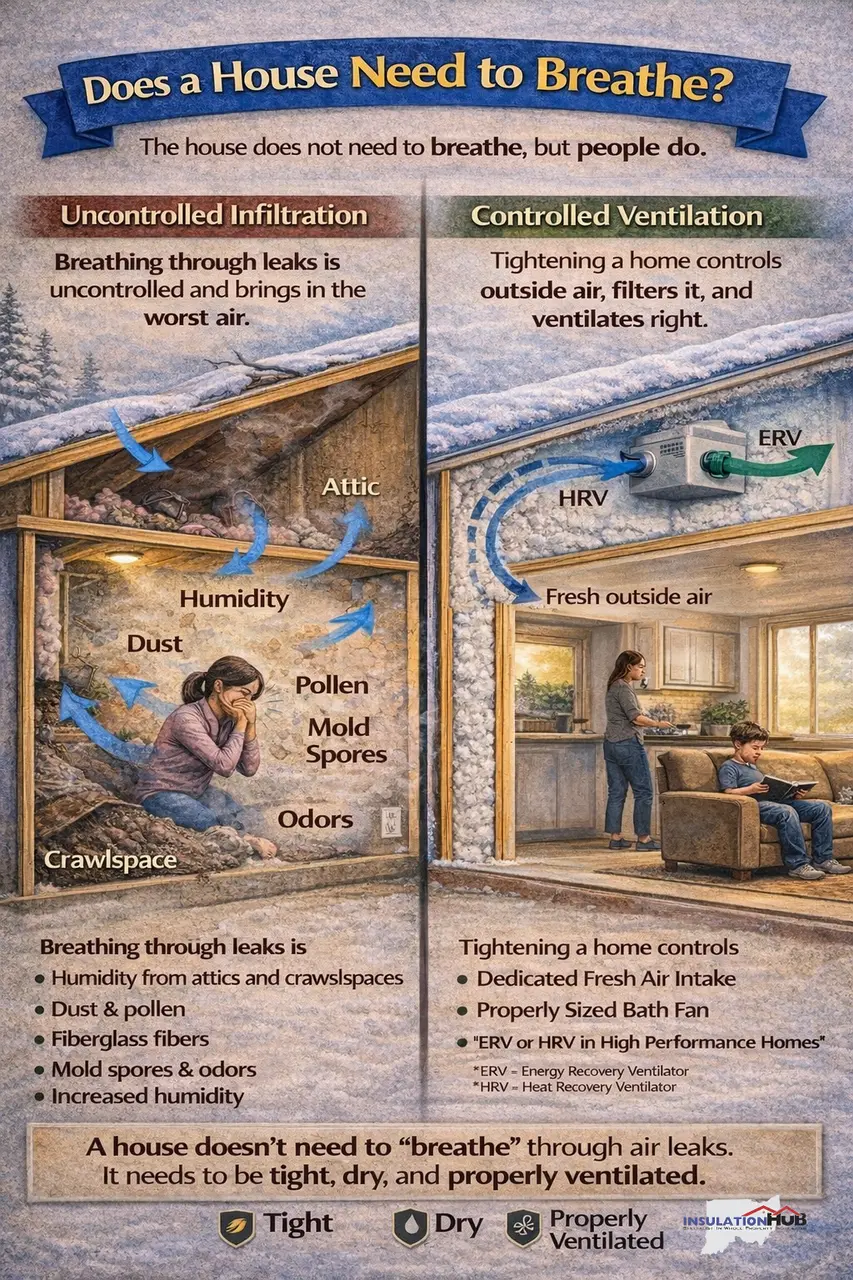
When people say a house needs to breathe, they are usually describing uncontrolled air leakage.
The Problem With “Breathing” Through Leaks
Uncontrolled air infiltration happens when outside air enters through cracks, gaps, and penetrations in the building envelope. This type of air movement is unpredictable and often pulls air from the worst places, including:
- Crawlspaces
- Attics
- Wall cavities
- Garages
That air can carry humidity, dust, pollen, mold spores, odors, and insulation fibers into living spaces.
Why Airtight Homes Are Better
A well-sealed home controls where air enters and exits. Air sealing reduces random leakage and improves comfort, energy efficiency, and indoor air quality.
However, airtight homes still need fresh air.
Controlled Ventilation Is the Solution
Controlled ventilation intentionally brings in outdoor air at the correct rate. This air can be filtered, dehumidified, and distributed evenly throughout the home.
In higher-performance homes, this often includes:
- Dedicated fresh air intakes
- Properly sized bath fans
- ERVs or HRVs
The goal is not a leaky house. The goal is a home that is tight, dry, and properly ventilated.
FAQs
Is spray foam insulation too airtight?
No. Airtight homes are healthier when paired with proper ventilation.
Do tight homes need ventilation systems?
Yes, controlled ventilation ensures consistent fresh air.
What is uncontrolled infiltration?
Air entering through leaks instead of designed ventilation paths.
Does air sealing improve indoor air quality?
Yes, when combined with proper ventilation and filtration.