
Noise is one of the most common comfort complaints homeowners have, especially in homes with open floor plans, shared walls, home offices, or metal buildings.
If you are considering insulation upgrades, you may have heard that open cell spray foam helps reduce noise. That is true in many cases, but it is important to understand how it works, what type of noise it helps with, and what it does not do.
This guide explains how open cell spray foam absorbs sound, when it improves acoustic comfort, and when additional solutions may be needed.
How Sound Moves Through a Home
Sound is simply vibrating air. Those vibrations travel through open spaces, wall cavities, framing, and structural connections.
When sound waves hit surfaces, they can:
- Reflect back into a room as echo
- Pass through walls or ceilings into other spaces
- Be absorbed and weakened
Different insulation materials interact with sound in different ways depending on their structure and density.
What Makes Open Cell Spray Foam Different
Open cell spray foam has a soft, flexible structure made up of tiny, interconnected air pockets. Unlike dense or rigid insulation materials, it remains spongy after installation.
This structure allows open cell spray foam to interact with sound differently than materials designed primarily for thermal resistance.
Instead of reflecting sound waves, open cell foam slows them down.
How Open Cell Spray Foam Absorbs Sound (Acoustic Damping Explained)
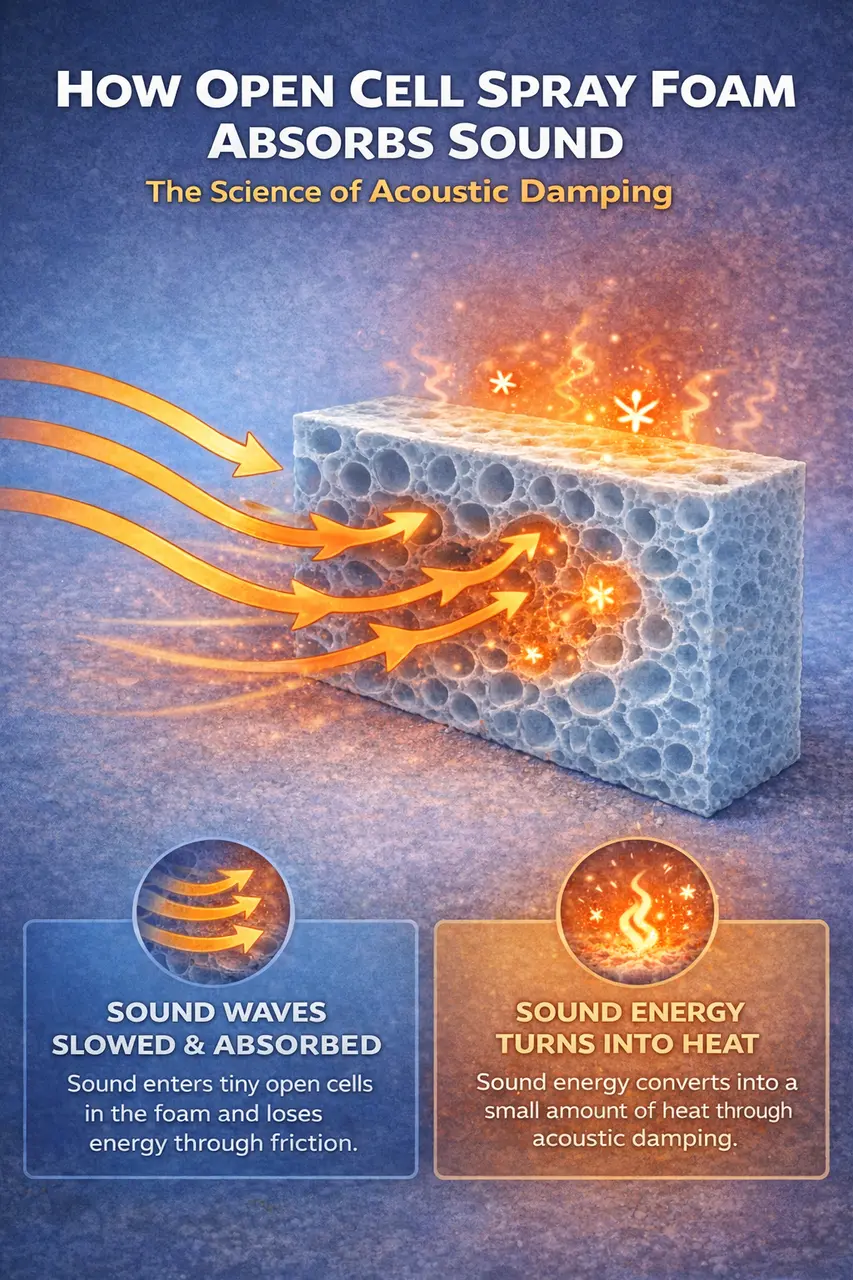
Sound is vibrating air. When sound waves enter the tiny open cells in open cell spray foam, they do not travel freely.
As the sound moves through the foam:
- The waves slow down
- They bounce around inside the small air pockets
- Friction reduces their energy
That lost sound energy is converted into a very small amount of heat. The temperature change is not noticeable, but the reduction in sound energy is.
This process is called acoustic damping.
Because the sound waves lose strength as they move through the foam, less noise reflects back into the room or travels through nearby spaces. This is why rooms insulated with open cell spray foam often feel quieter and less echo-prone.
Sound Absorption vs Soundproofing
This distinction matters.
Open cell spray foam absorbs sound, but it does not fully soundproof a space.
Sound absorption:
- Reduces echo and reverberation
- Lowers perceived noise levels
- Improves acoustic comfort inside a room
Soundproofing:
- Blocks sound from traveling between rooms
- Requires mass, airtight construction, and separation
- Often involves multiple materials working together
Open cell spray foam improves comfort and reduces everyday noise, but it is not designed to completely block loud or impact sounds.
When Open Cell Spray Foam Helps With Noise
Open cell spray foam can be very effective for:
- Home offices
- Bedrooms near living areas
- Media rooms with echo issues
- Barndominiums and metal buildings
- Shared interior walls where voices carry easily
In these situations, homeowners often notice spaces feel quieter, softer, and less hollow.
When Additional Sound Control Is Needed
If the goal is to prevent sound from traveling between rooms entirely, additional measures may be required.
These can include:
- Layered wall assemblies
- Specialized sound-dampening materials
- Structural separation between spaces
A professional assessment can help determine whether open cell spray foam alone will meet your goals or if a combination of solutions makes more sense.
Open Cell vs Closed Cell Spray Foam for Sound
Open cell spray foam generally performs better for sound absorption than closed cell spray foam.
Closed cell spray foam is denser and more rigid. It excels at air sealing and moisture control but does not absorb sound as effectively.
Choosing between them depends on whether your priority is:
- Acoustic comfort
- Structural strength
- Moisture resistance
- Energy efficiency
- Or a combination of factors
Why Installation Quality Matters
Even the right material will not perform well if it is poorly installed.
Proper depth, coverage, and sealing are critical for sound absorption. Gaps or thin spots can allow sound to pass through untreated areas, reducing effectiveness.
This is why professional installation and evaluation matter when noise reduction is a goal.
Is Open Cell Spray Foam Right for Your Noise Concerns?
Open cell spray foam is an excellent option for improving acoustic comfort in many homes, but it is not a one-size-fits-all solution.
Understanding the type of noise you want to reduce and how sound moves through your space helps determine whether it is the right choice.
Get a Professional Assessment
If noise is affecting your comfort, a professional insulation assessment can help identify:
- Where sound is traveling
- What materials will help
- Whether open cell spray foam is the right solution
👉 Get a detailed quote to explore insulation options that improve both comfort and sound control.
FAQs About Open Cell Spray Foam and Sound
Does open cell spray foam absorb sound?
Yes. Open cell spray foam absorbs airborne sound by slowing sound waves and reducing their energy through acoustic damping.
Is open cell spray foam good for soundproofing?
It helps reduce noise and echo but does not fully soundproof a space. Complete soundproofing usually requires additional construction methods.
Why does open cell spray foam reduce noise better than some other insulation types?
Its soft, porous structure traps sound waves and reduces their energy, making it effective at absorbing airborne noise.
Is open cell spray foam better than fiberglass for sound?
In many cases, yes. Open cell spray foam both absorbs sound and seals air gaps, which helps reduce noise movement.
Can open cell spray foam reduce noise between rooms?
It can reduce how much sound carries, especially voices and everyday noise, but it may not fully block louder sounds.