
If your furnace or air conditioner seems to be running nonstop, you’re not alone and it doesn’t automatically mean your HVAC system is failing.
Many homeowners assume constant runtime means they need a new furnace or AC. In reality, HVAC systems often work overtime because the home itself isn’t holding conditioned air properly. Before you invest thousands in new equipment, it’s worth checking a few common issues that can quietly force your system to struggle.
Thermostat Settings and Placement
Sometimes the problem starts with the thermostat. If it’s placed near a drafty window, exterior wall, or in direct sunlight, it may be reading temperatures inaccurately and calling for heating or cooling more often than necessary.
Upgrading to a programmable or smart thermostat can help smooth temperature swings but it’s important to understand this: a thermostat can only manage temperature, not fix air loss. If your home is leaking air, even the best thermostat can’t prevent your system from running longer than it should.
Air Filters and Airflow Restrictions
Dirty filters and blocked vents restrict airflow, making it harder for your HVAC system to deliver conditioned air throughout the home. When airflow is limited, your system has to run longer to reach the set temperature.
Regular filter changes are essential but if your system still runs constantly even with clean filters, airflow issues may point to duct leakage or pressure imbalances caused by poor insulation or air sealing.
Duct Leaks, Attics, and Insulation Gaps
One of the most common and most overlooked causes of constant HVAC runtime is air loss through poorly insulated or unsealed areas.
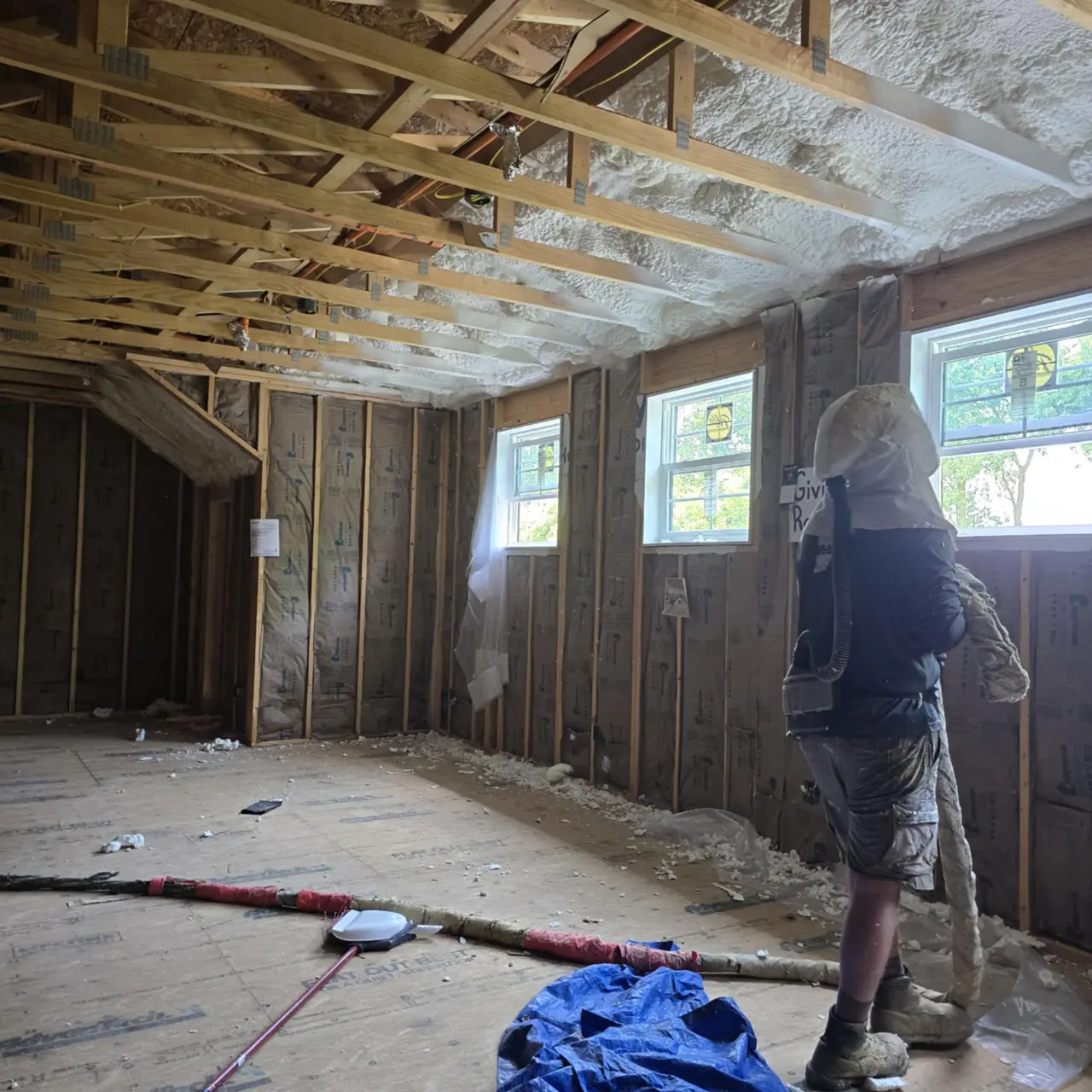
Attics, crawl spaces, basements, and ductwork are prime problem zones. When conditioned air escapes through gaps or thin insulation, your HVAC system keeps working to replace air that never stays inside.
This often shows up as:
- Hot or cold rooms
- Temperature differences between floors
- HVAC systems that “never shut off”
- High energy bills despite newer equipment
In many cases, sealing and insulating these areas can dramatically reduce runtime without touching the HVAC unit itself.
System Size Isn’t Always the Real Issue
Homeowners are often told their system is “too small” when it can’t keep up. While sizing matters, many systems are blamed unfairly.
If a home leaks air or lacks proper insulation, even a correctly sized system will struggle. Replacing HVAC equipment without addressing insulation often leads to the same comfort problems just with a newer unit.
Age and Maintenance Still Matter, But Context Is Key
Older systems naturally lose efficiency over time, and regular maintenance is important. However, even well-maintained systems can underperform in homes with poor insulation or air sealing.
If your system is under 15 years old and running constantly, the issue may not be the equipment it may be the building envelope working against it.
The Smarter First Step
Before replacing your furnace or air conditioner, it’s worth evaluating how well your home holds heated or cooled air.
Improving insulation and air sealing:
- Reduces HVAC runtime
- Improves comfort room to room
- Lowers energy bills
- Extends equipment lifespan
In many cases, it can also delay or eliminate the need for HVAC replacement.
If your HVAC system can’t keep up, don’t guess.
Start with an insulation and air-sealing assessment to uncover the real cause and fix the problem at its source.