
If your home feels drafty in the winter, certain rooms never seem to warm up, or your energy bills keep climbing year after year, heat loss is often the reason. Most homes lose heat in the same key areas, and many homeowners do not realize how much energy is escaping until they see it firsthand.
Understanding where heat loss occurs is the first step toward improving comfort, lowering heating costs, and protecting your home long term. Below are the five most common heat loss hotspots we find, along with signs to watch for, simple checks you can do yourself, and professional solutions that actually fix the problem.
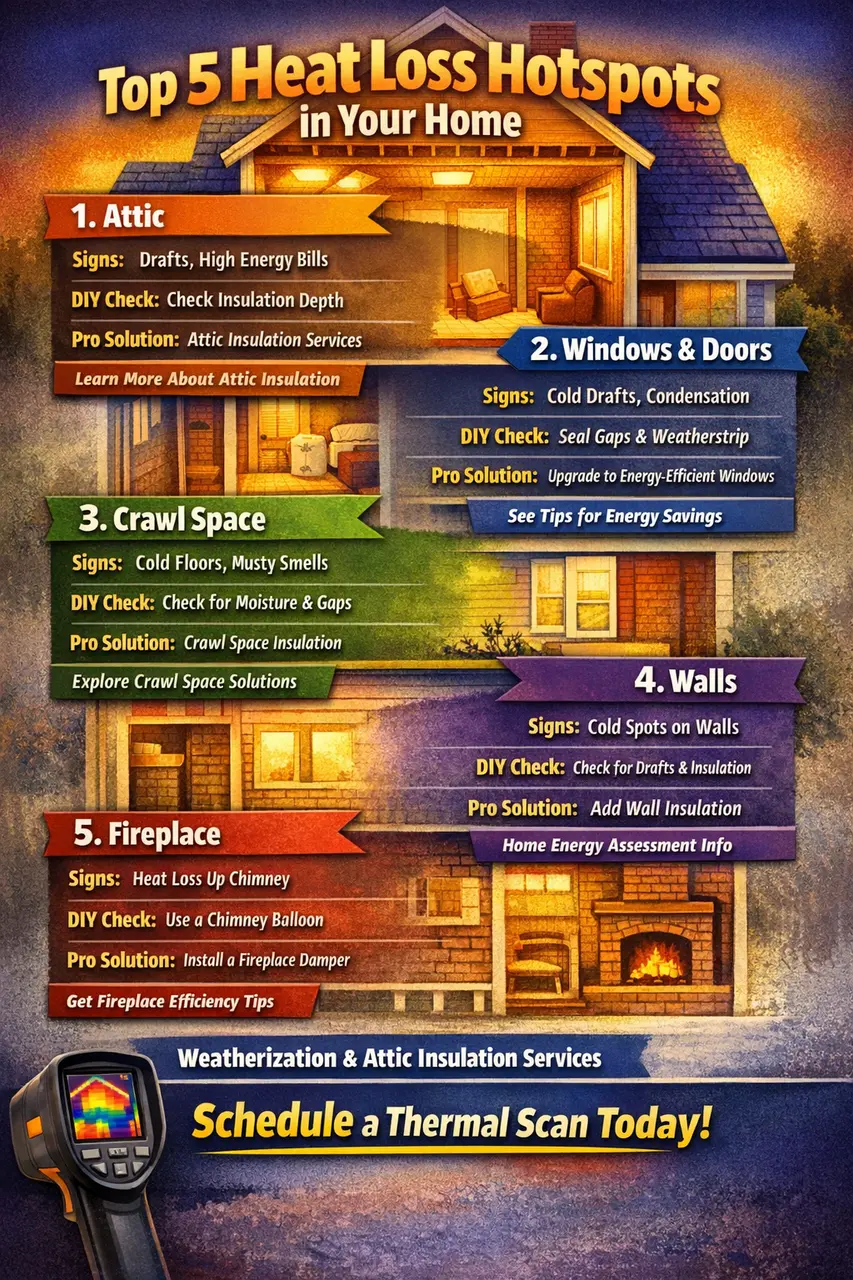
1. Windows and Doors
Windows and doors are another major source of heat loss, especially in older homes. Small gaps around frames allow warm air to escape and cold air to enter, often without homeowners realizing it.
Drafts near windows and doors, condensation on glass, or rooms that feel colder than the rest of the house are common warning signs. On a cold or windy day, you can hold your hand near the frame or use a candle or incense stick to see if air is moving.
Weatherization services such as air sealing and weatherstripping are often enough to significantly reduce heat loss around windows and doors. These upgrades improve comfort without requiring full window replacement.
2. Attic Insulation
The attic is the number one source of heat loss in most homes. Warm air naturally rises, and without proper insulation and air sealing, that heat escapes straight through the roof.
Common signs of attic heat loss include high heating bills, uneven temperatures between floors, and snow melting quickly on the roof in winter. Many homeowners are surprised to learn that their attic insulation is either too thin, compressed, or has settled over time.
A quick DIY check involves looking into your attic and checking insulation depth. If you can see exposed joists or areas where insulation looks dark or dusty, those are signs of air leakage.
Professional attic insulation and air sealing help lock heat inside the home where it belongs. Upgrading attic insulation is one of the most effective ways to improve energy efficiency and comfort.
3. Walls
Walls can be a hidden source of heat loss, especially in older homes with little or no insulation inside wall cavities. This often shows up as cold spots, drafty rooms, or areas that never seem to reach the desired temperature.
A simple check is placing your hand against interior walls on a cold day. If some walls feel noticeably colder than others, heat may be escaping through poorly insulated areas. Drafts around outlets and switch plates can also indicate air leakage.
Professional wall insulation and targeted air sealing can greatly improve comfort without major remodeling.
4. Crawl Space and Basement
Cold floors and musty odors are often linked to heat loss in crawl spaces and basements. When these areas are under insulated or not sealed properly, cold air moves upward into living spaces.
You can do a basic check by inspecting exposed foundation walls, looking for gaps, or feeling for cold air near the rim joist. Moisture or damaged insulation is also a common issue in these areas.
Insulating and sealing crawl spaces and basement walls helps keep cold air out while improving indoor comfort and energy efficiency.
5. Fireplace and Chimney
Fireplaces and chimneys are often overlooked when it comes to heat loss. Even when not in use, they can act like an open window if not sealed properly.
Signs include cold air coming from the fireplace or noticeable drafts near the hearth. You can check by placing your hand inside the firebox when the damper is closed and feeling for airflow.
Sealed dampers, chimney balloons, and weatherization solutions help prevent warm air from escaping straight up the chimney.
Why a Thermal Scan Makes the Difference
Not all heat loss is visible. A thermal scan uses infrared imaging to show exactly where heat is escaping throughout your home. This removes the guesswork and allows problems to be addressed efficiently.
A thermal scan can identify hidden air leaks, insulation gaps, and problem areas that may not be obvious during a visual inspection. It also helps prioritize which upgrades will provide the greatest return.
Schedule a Thermal Scan Today
At Insulation Hub, we provide professional thermal scans, weatherization services, and attic and crawl space insulation installation to help homeowners improve comfort and reduce energy costs.
If you suspect heat loss but are not sure where it is coming from, a thermal scan is the smartest first step.