
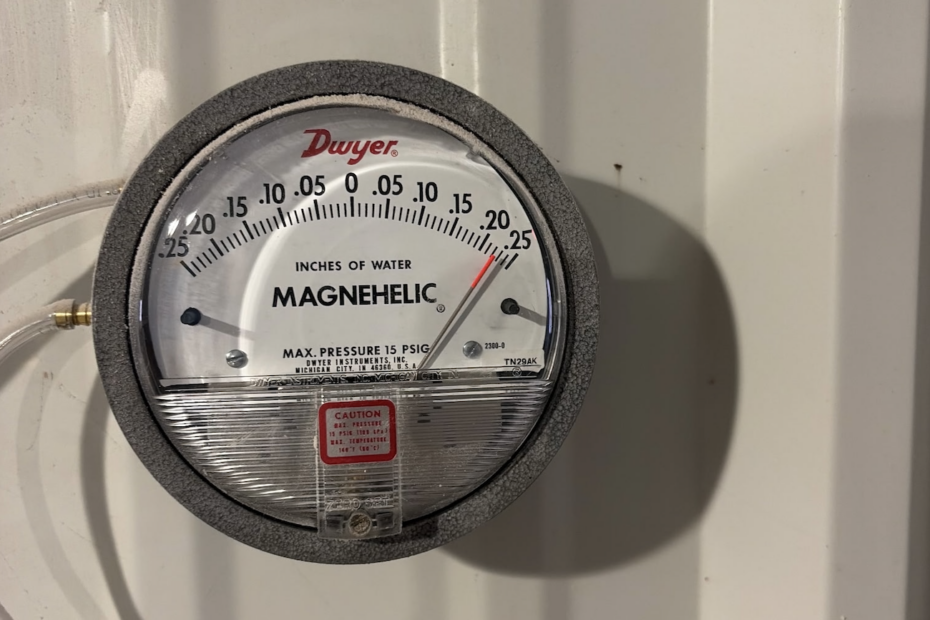
When a feed manufacturing facility in St. Henry, Ohio, installed a new pressurization fan, the expectation was that it would help control airborne dust throughout the building.
There was just one problem: even with the approximately $30,000 fan operating at full speed, the building could not hold pressure.
Multiple other professionals reportedly believed the facility was too leaky to reach its target.
Insulation HUB took on the challenge.
Why Building Pressure Mattered
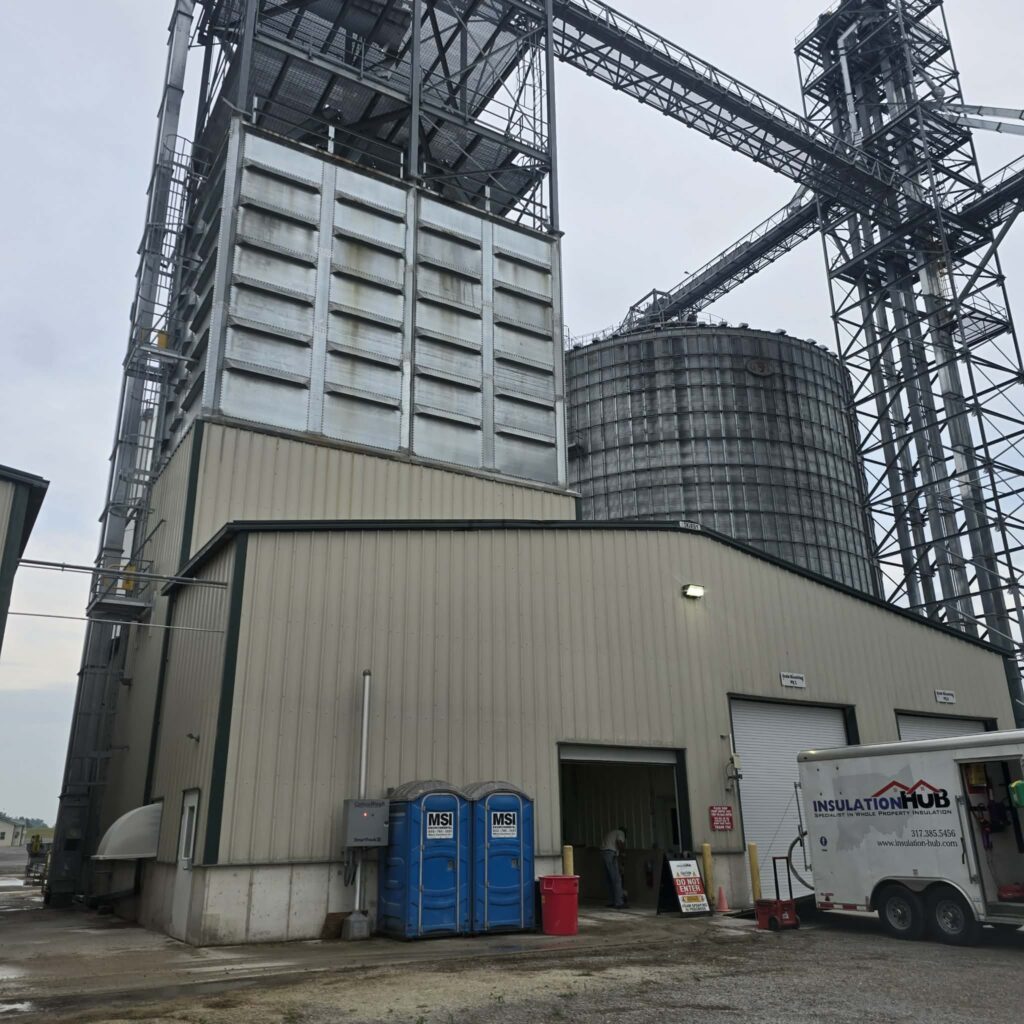
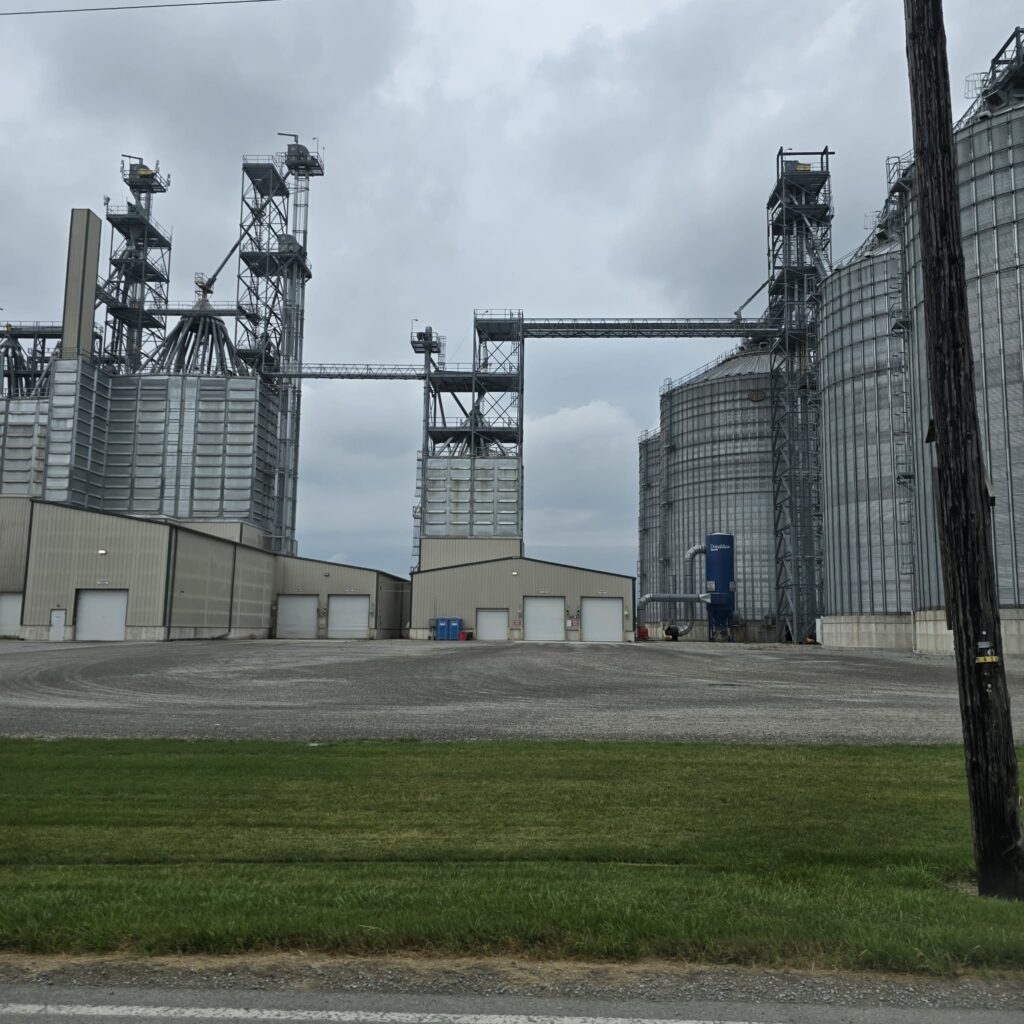
This facility receives raw ingredients, including corn, and processes them into animal feed. During production, the corn is ground into a fine dust and moved through an enclosed system.
Maintaining positive pressure within the building helps prevent dust from escaping through openings and spreading throughout the facility. Keeping the dust contained within the equipment is important for cleanliness, operational performance and safety because excessive airborne combustible dust can increase the risk of ignition or fire.
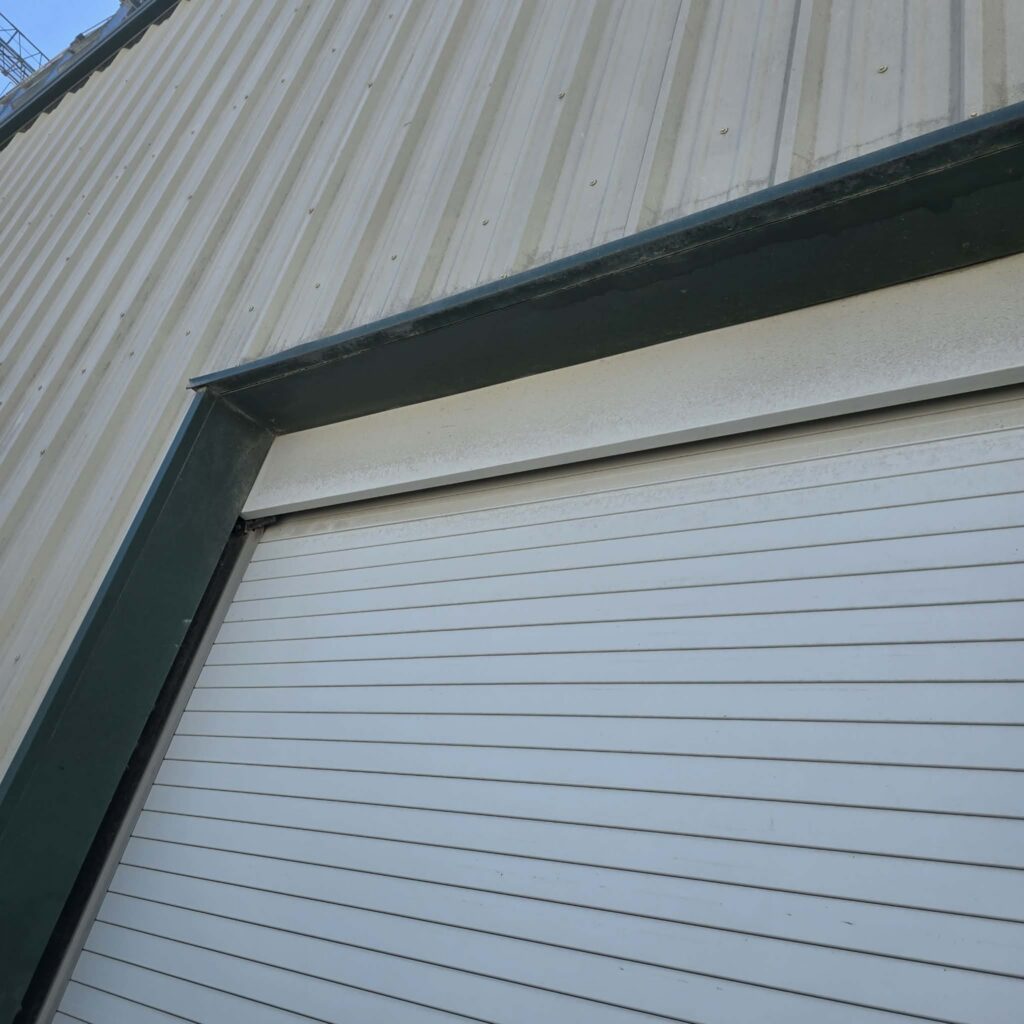
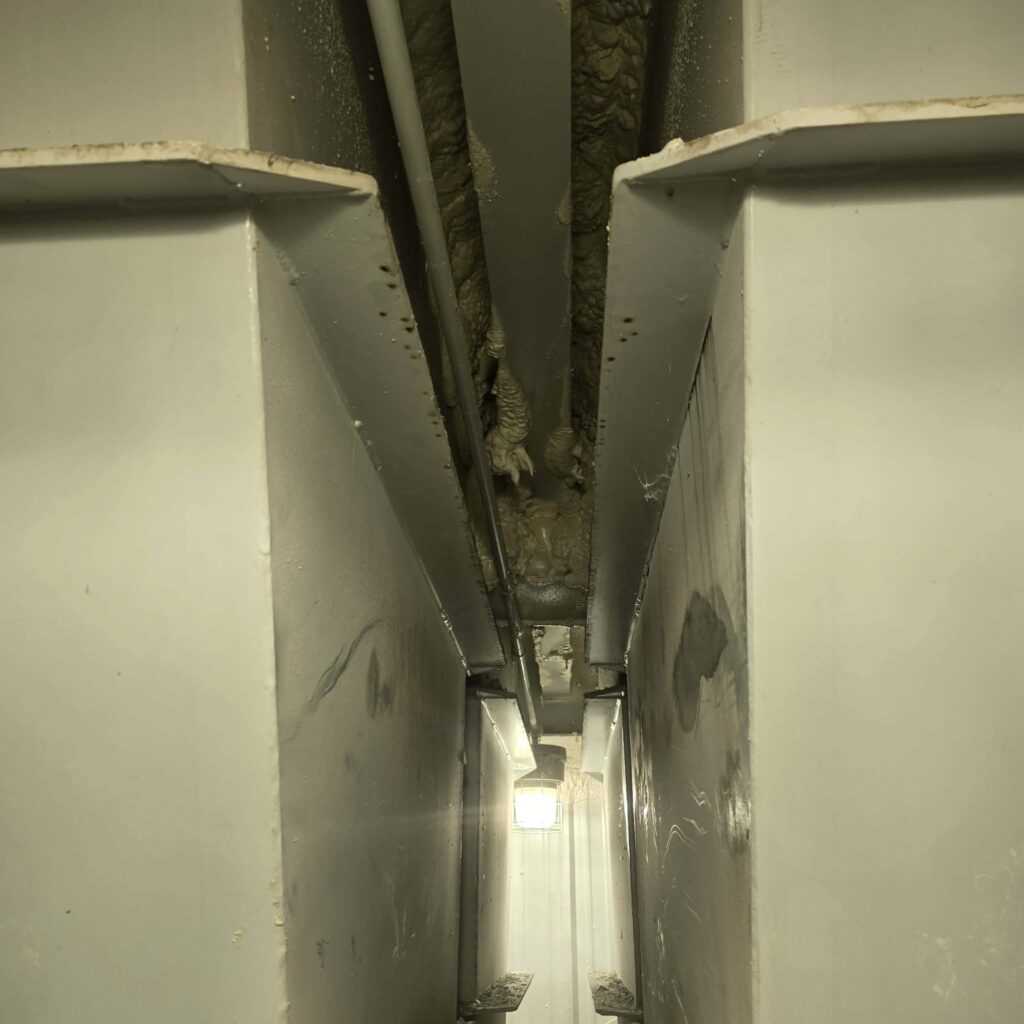
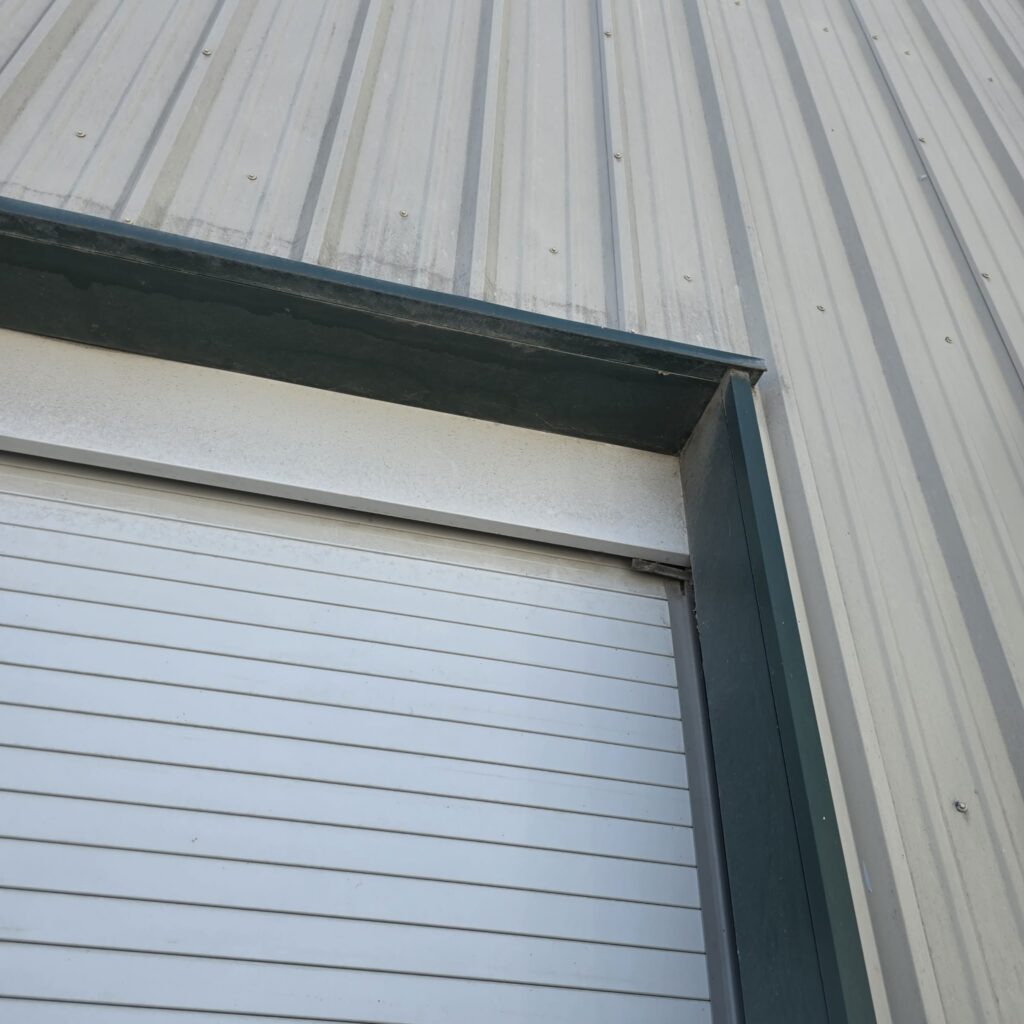
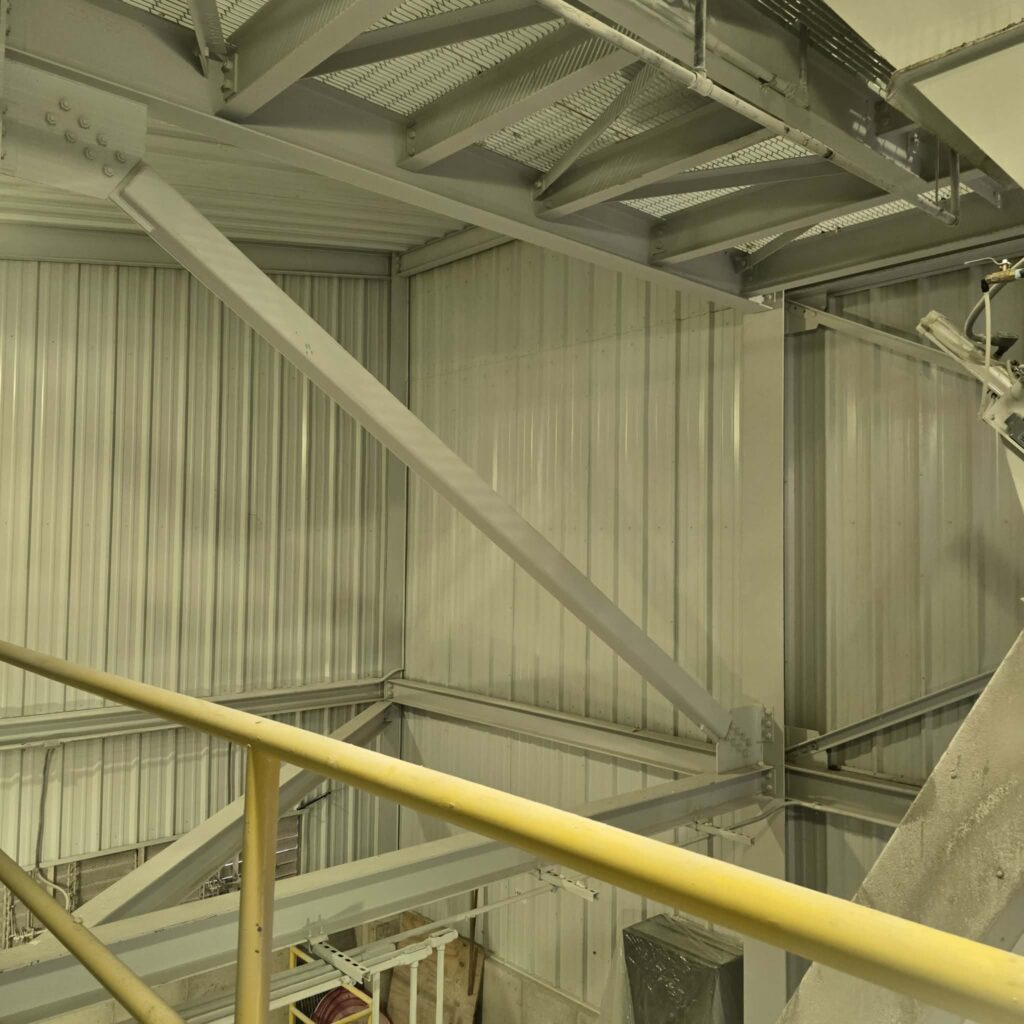
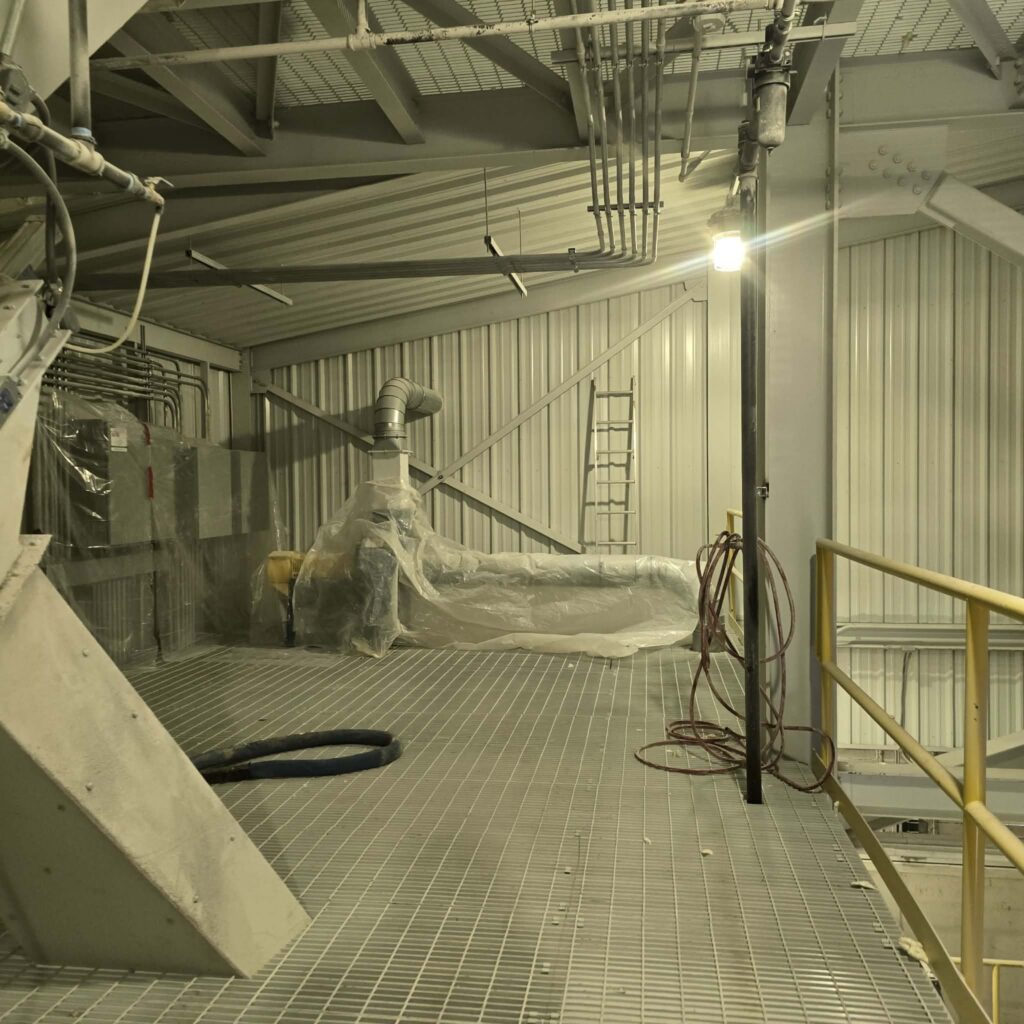
The facility had already invested in a powerful new fan designed to pressurize the building. However, air was escaping through so many holes, cracks, seams and structural gaps that the fan could not build measurable pressure.
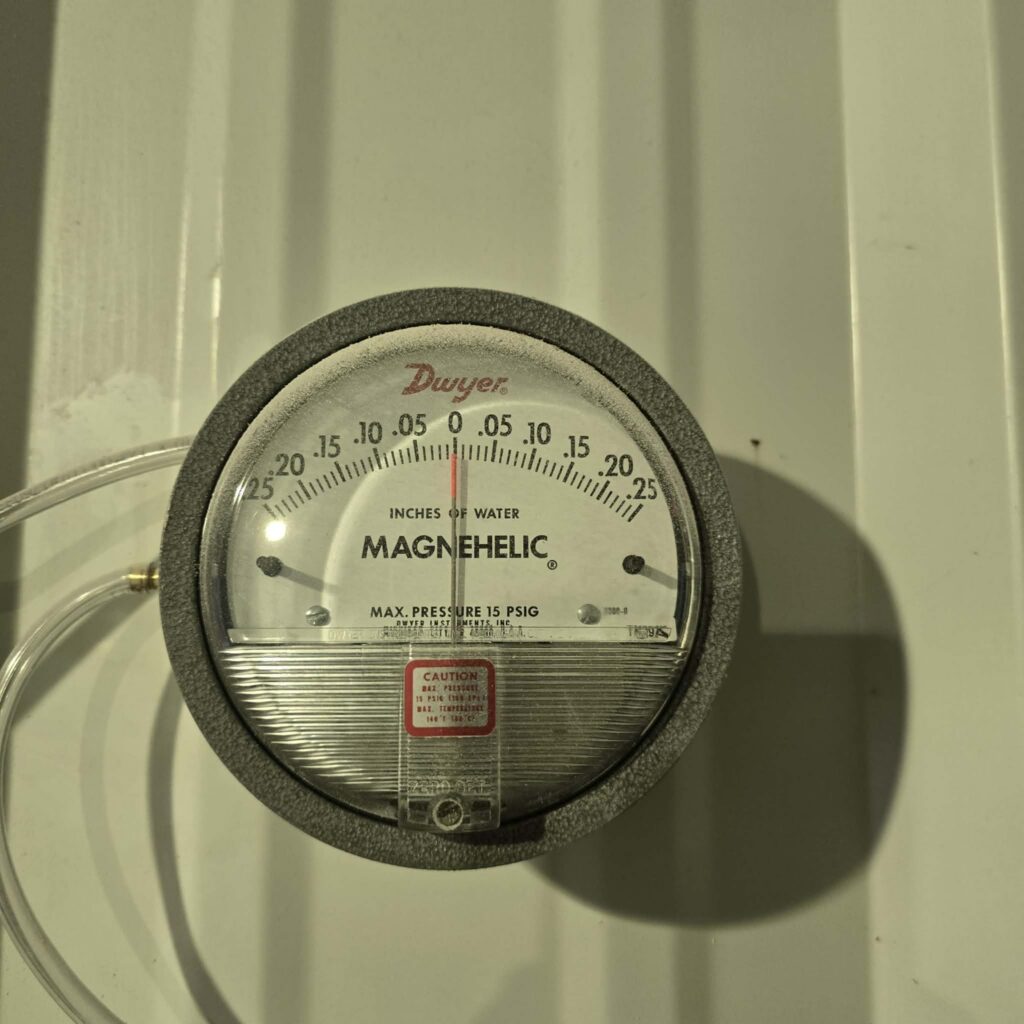
The Starting Pressure Was 0.00
Insulation HUB tested the facility while the pressurization fan and normal plant operations were running.
The initial pressure reading was:
0.00 inches of water column
The fan was operating, but the building envelope was losing air too quickly to establish pressure.
Rather than simply applying spray foam throughout the facility, the Insulation HUB team used a building-science-based process to determine where the air was escaping.
The investigation included:
- Pressure testing while the plant was operating
- Blower door equipment
- Smoke-pen testing
- Thermal imaging
- Visual inspection
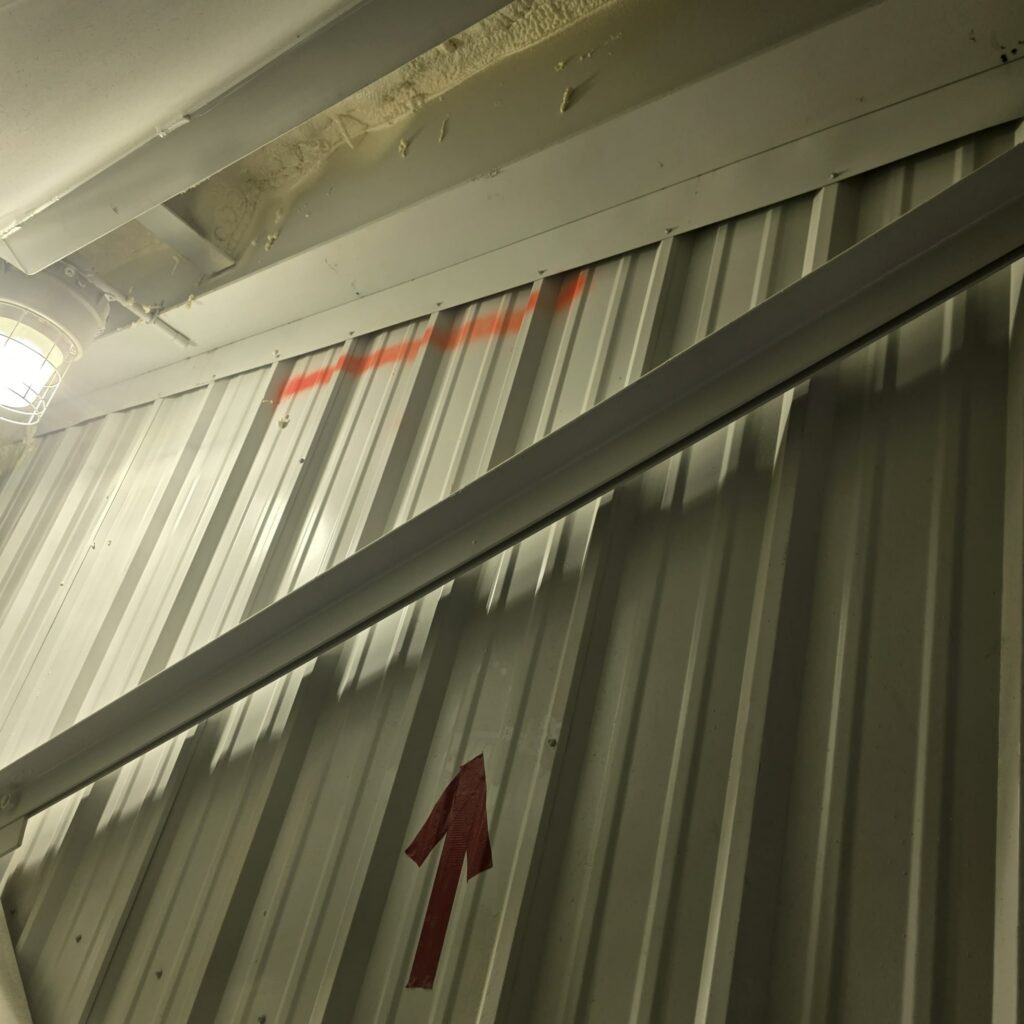
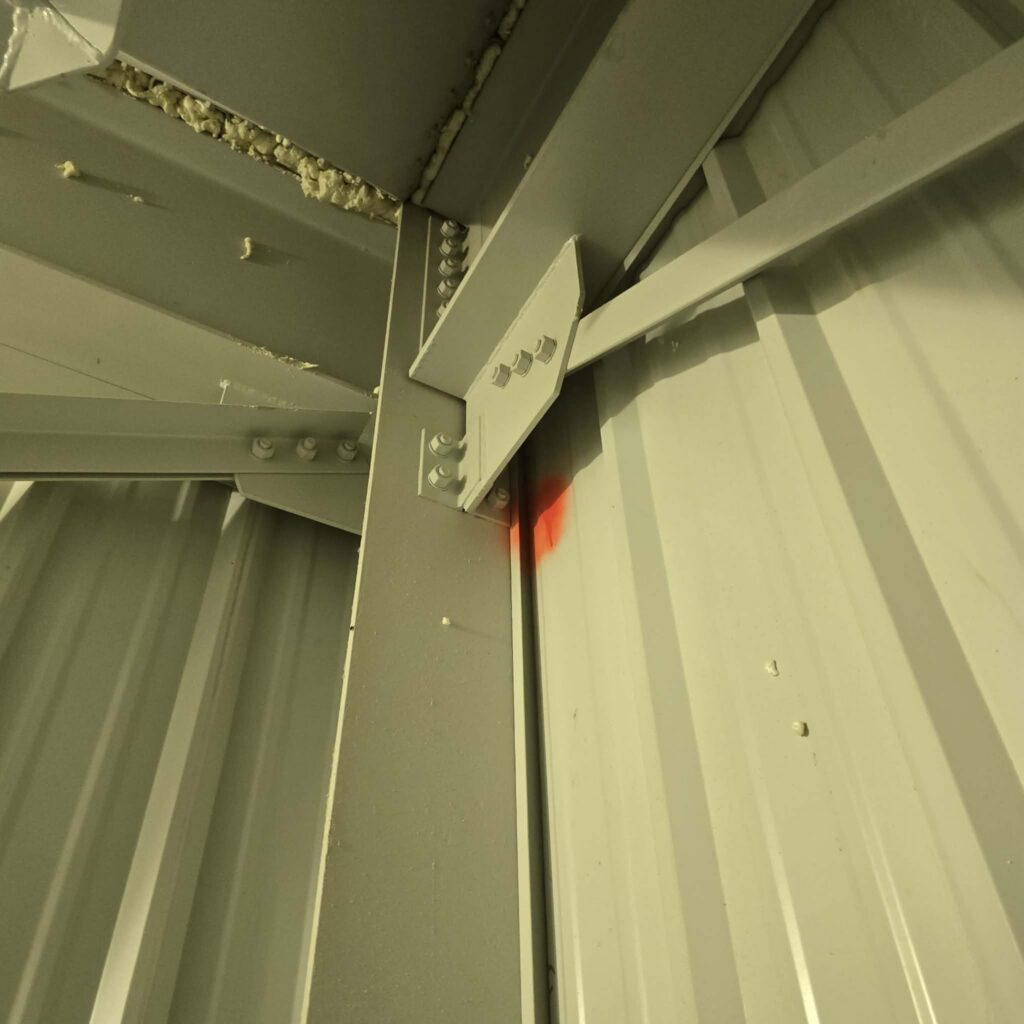
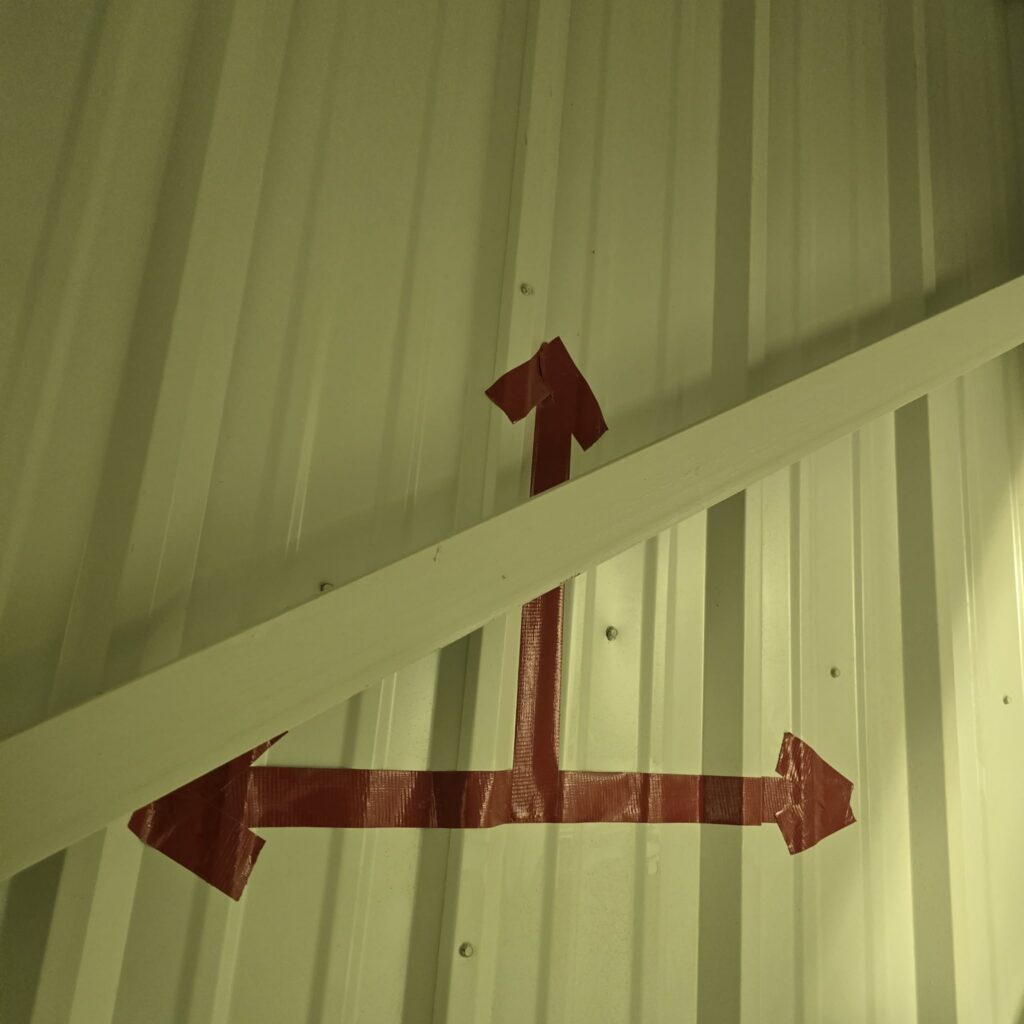
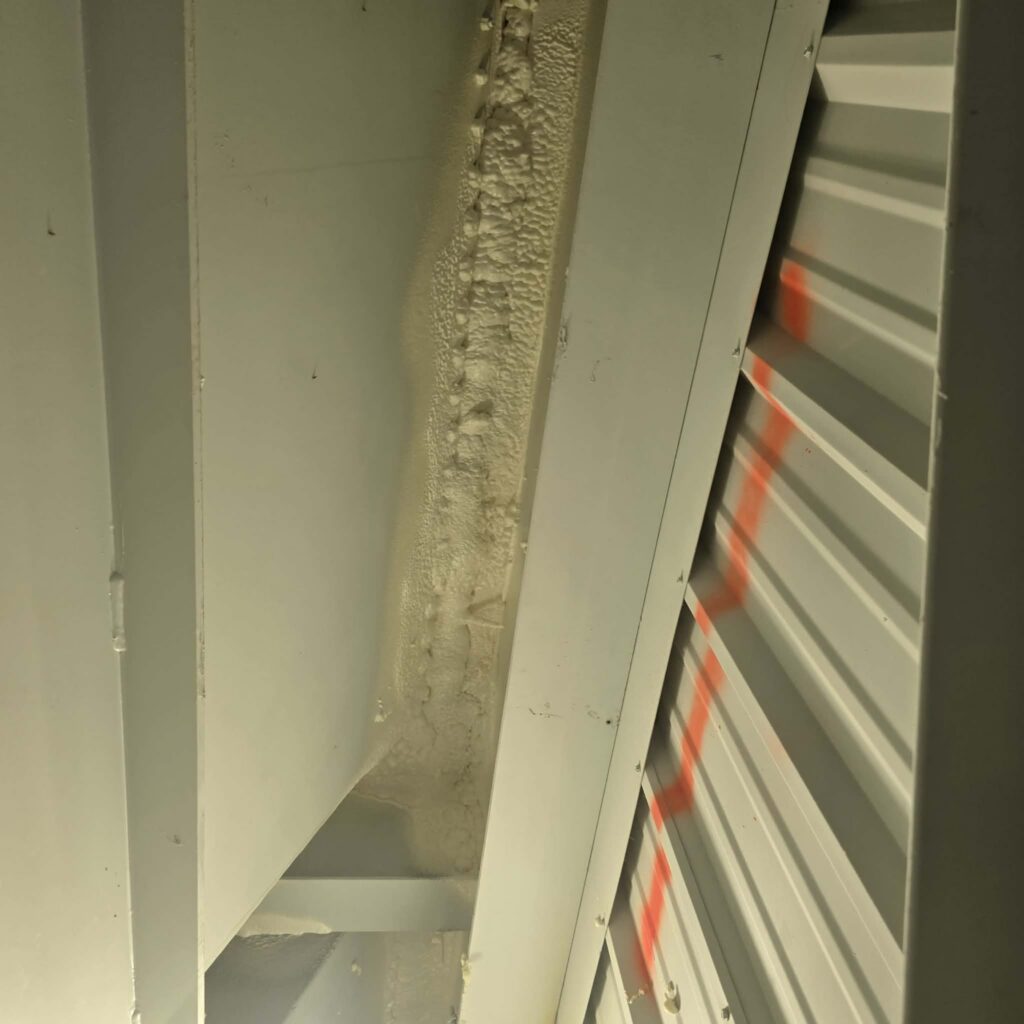
- Marking identified leakage areas
This allowed the crew to target the openings that were having the greatest effect on the building’s performance.
Sealing the Building’s Gaps and Air Pathways
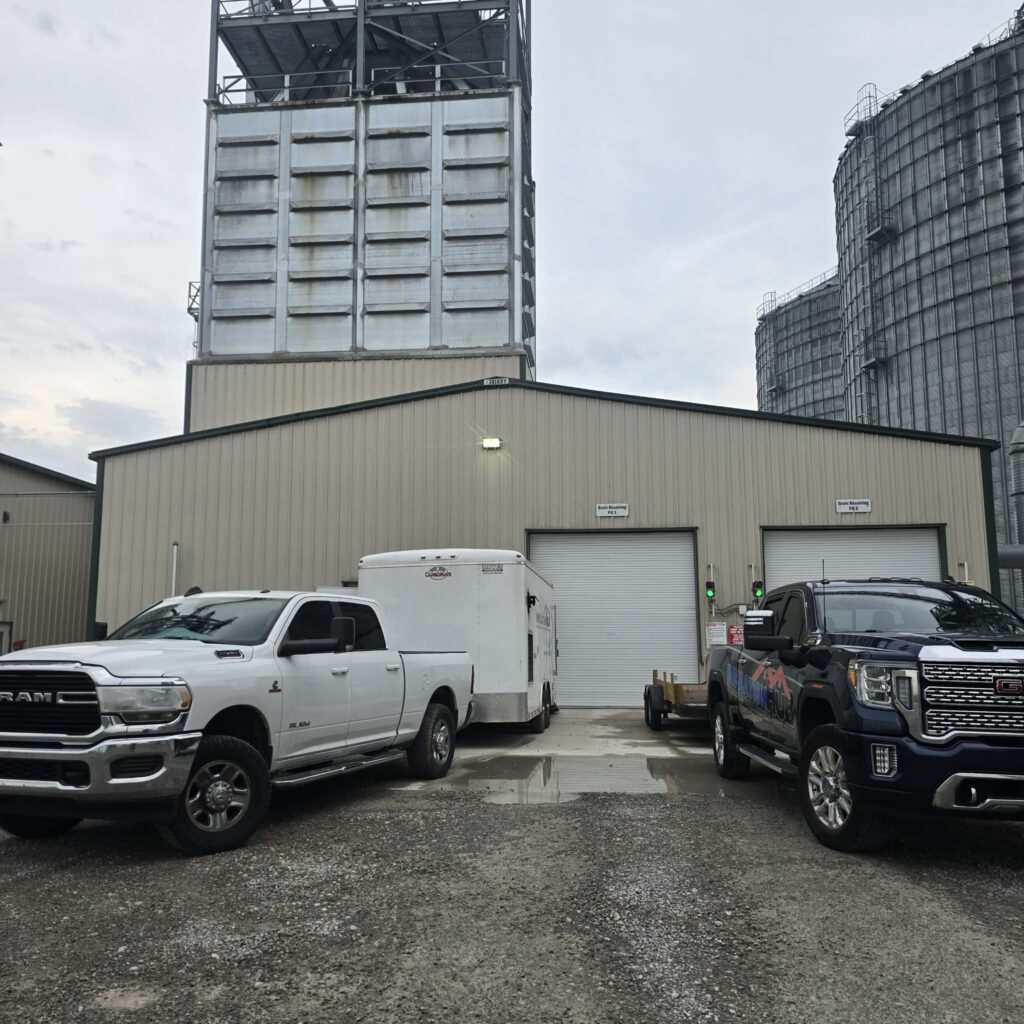
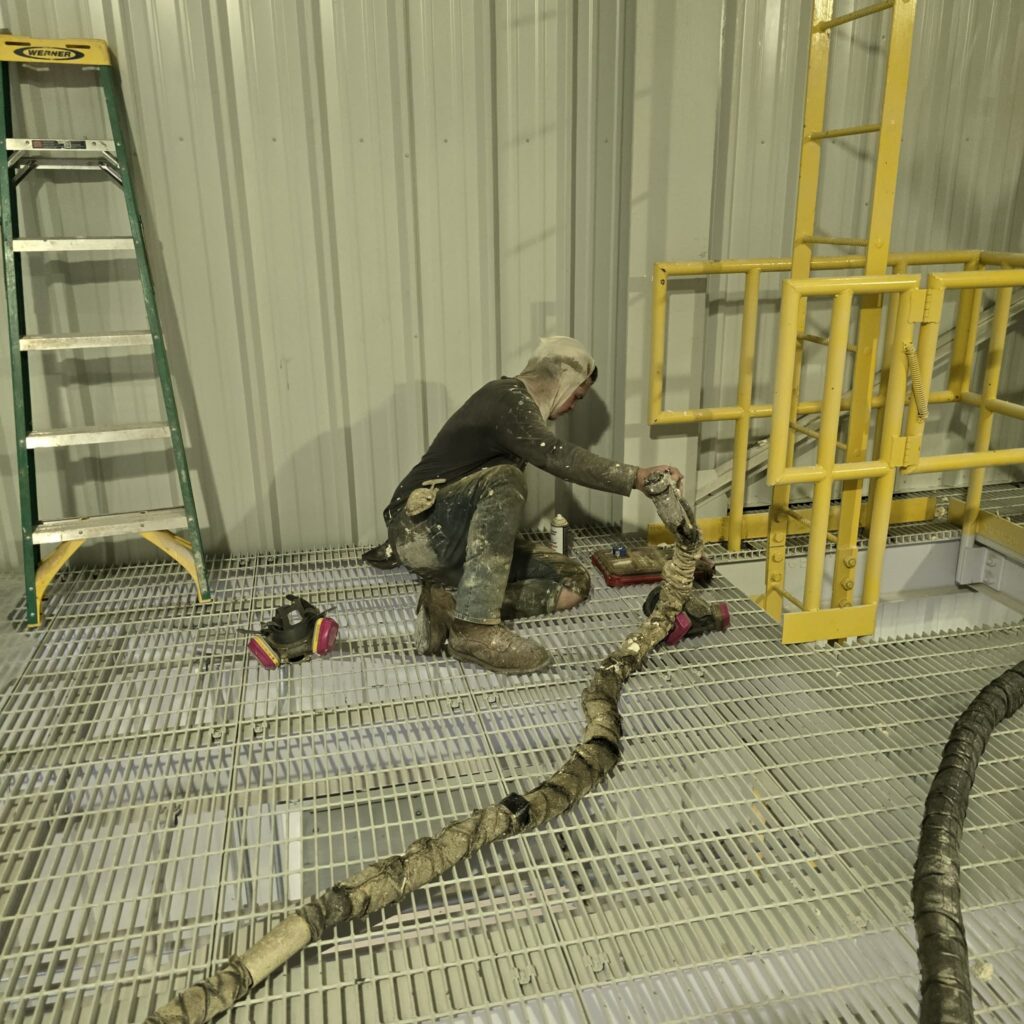
Insulation HUB returned on a Saturday when the plant could be shut down for the spray foam installation.
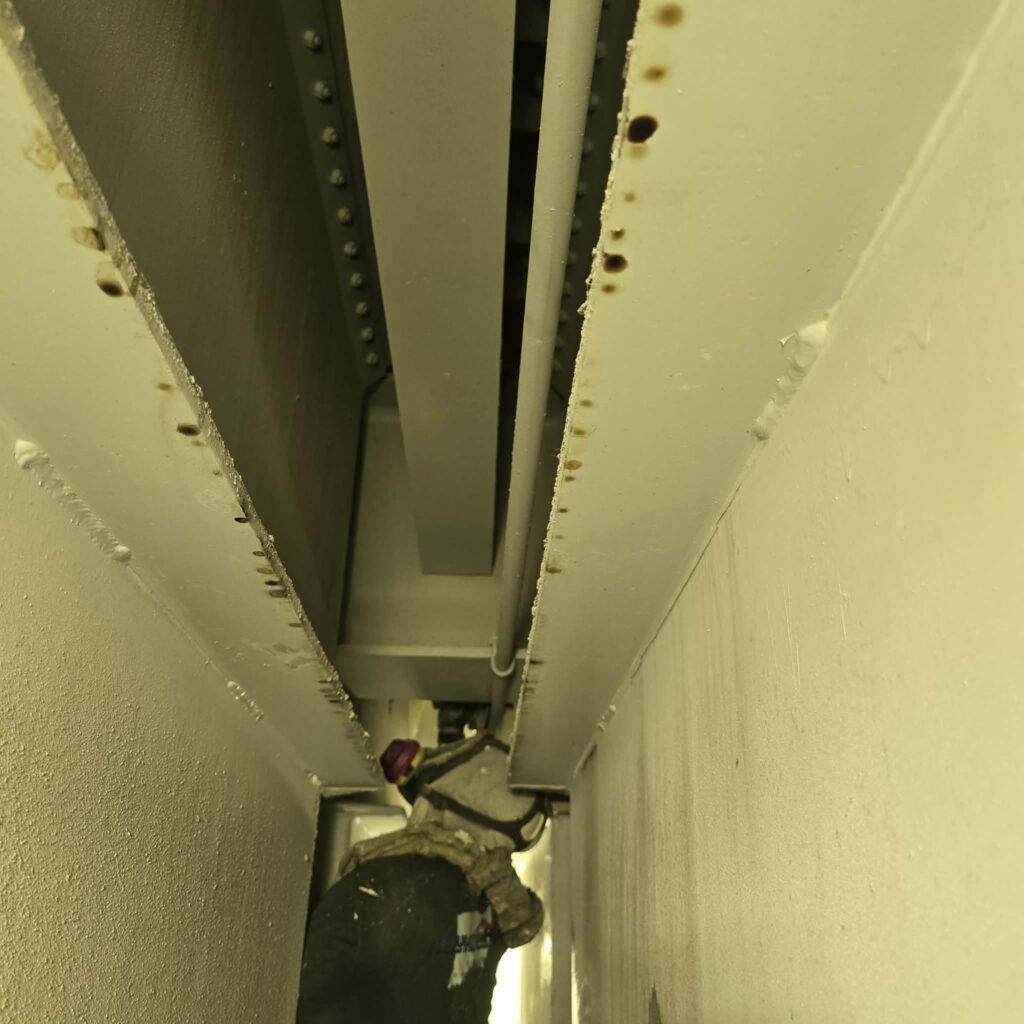
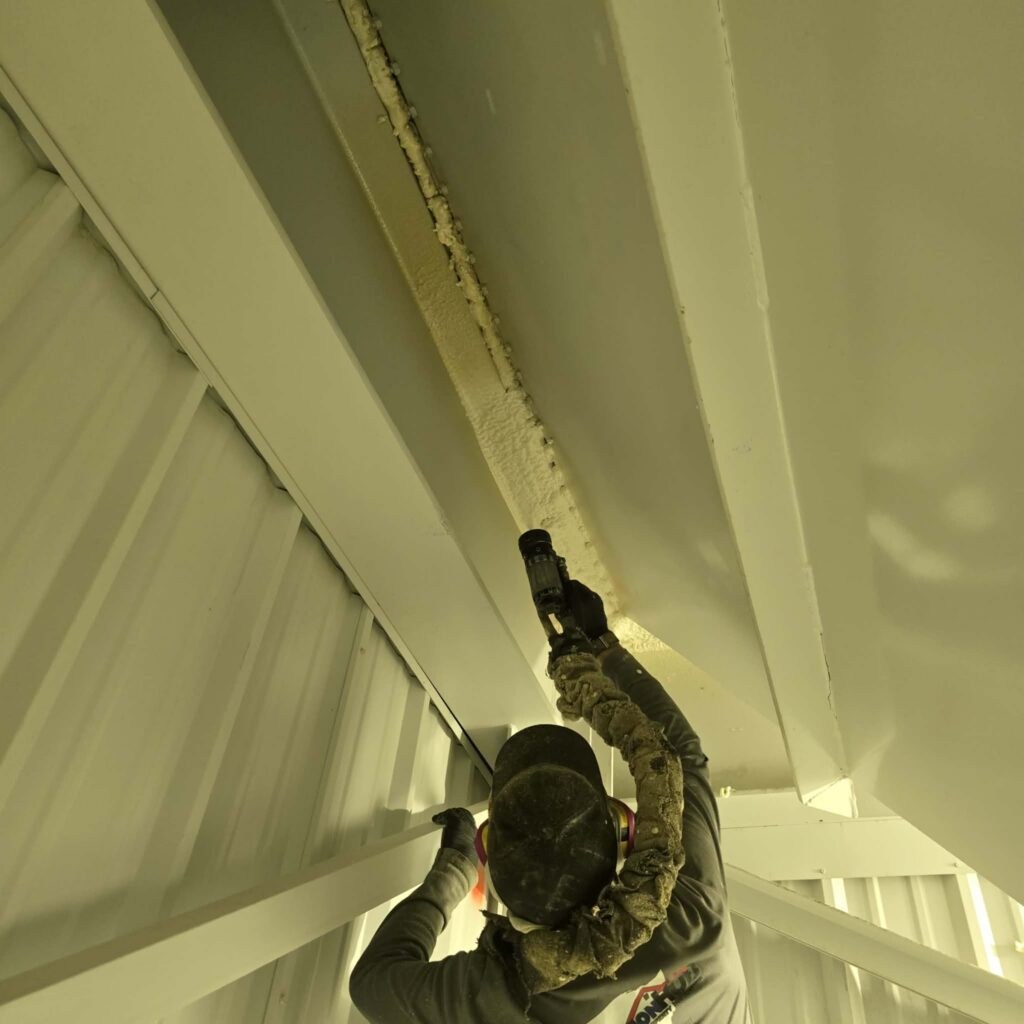
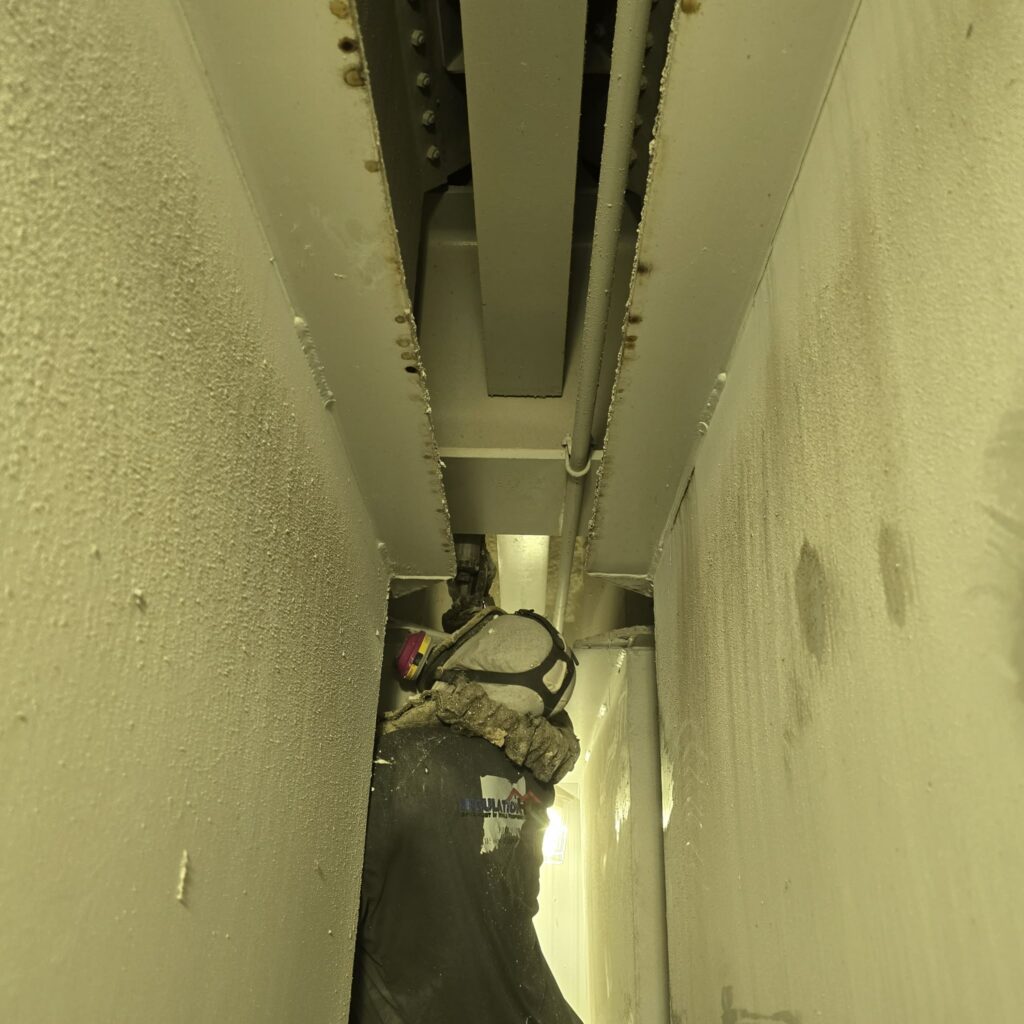
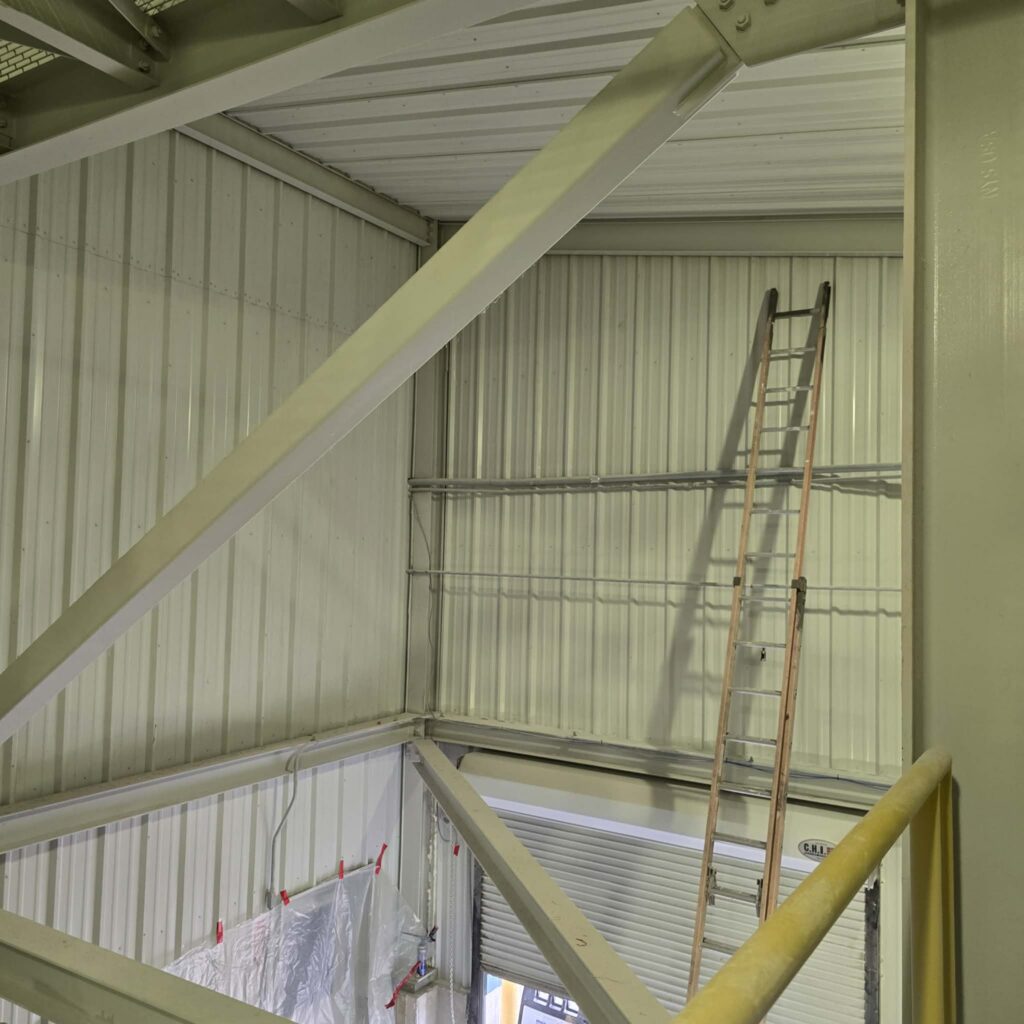
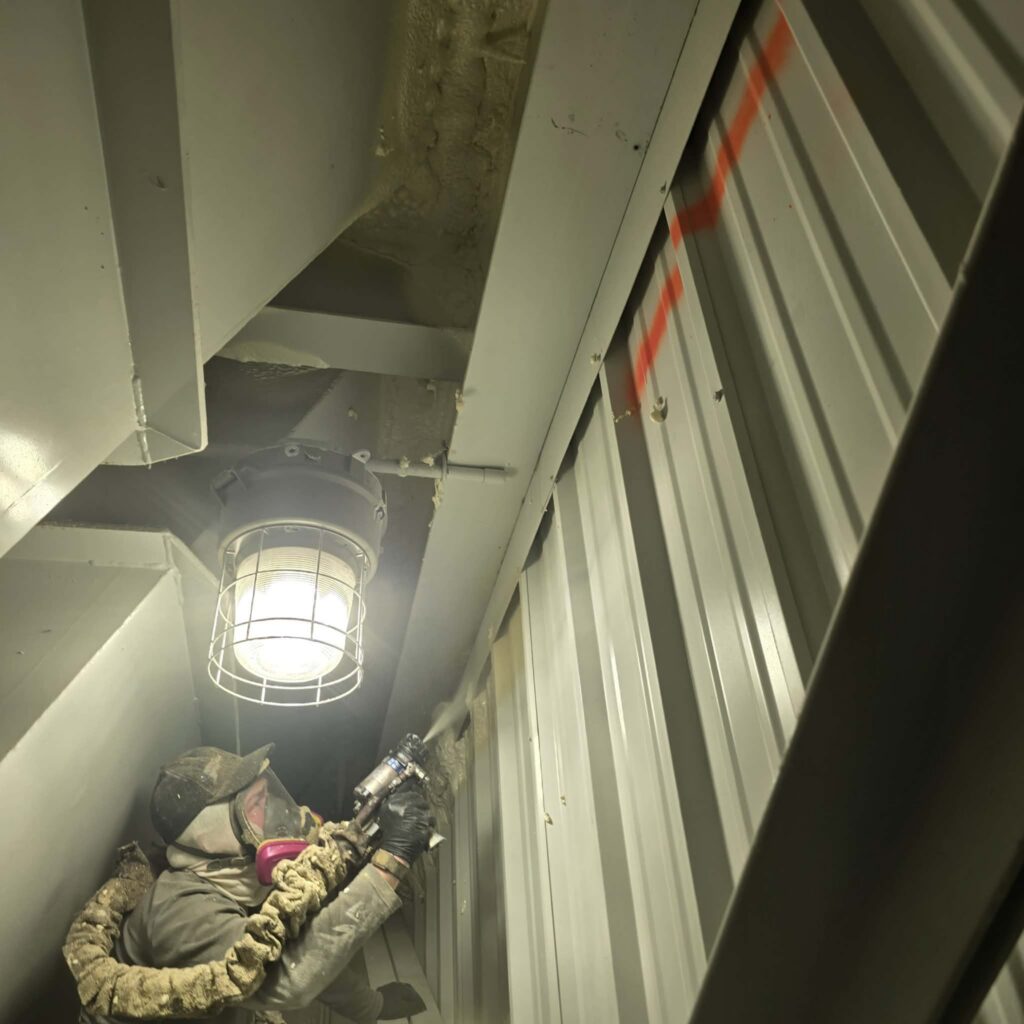
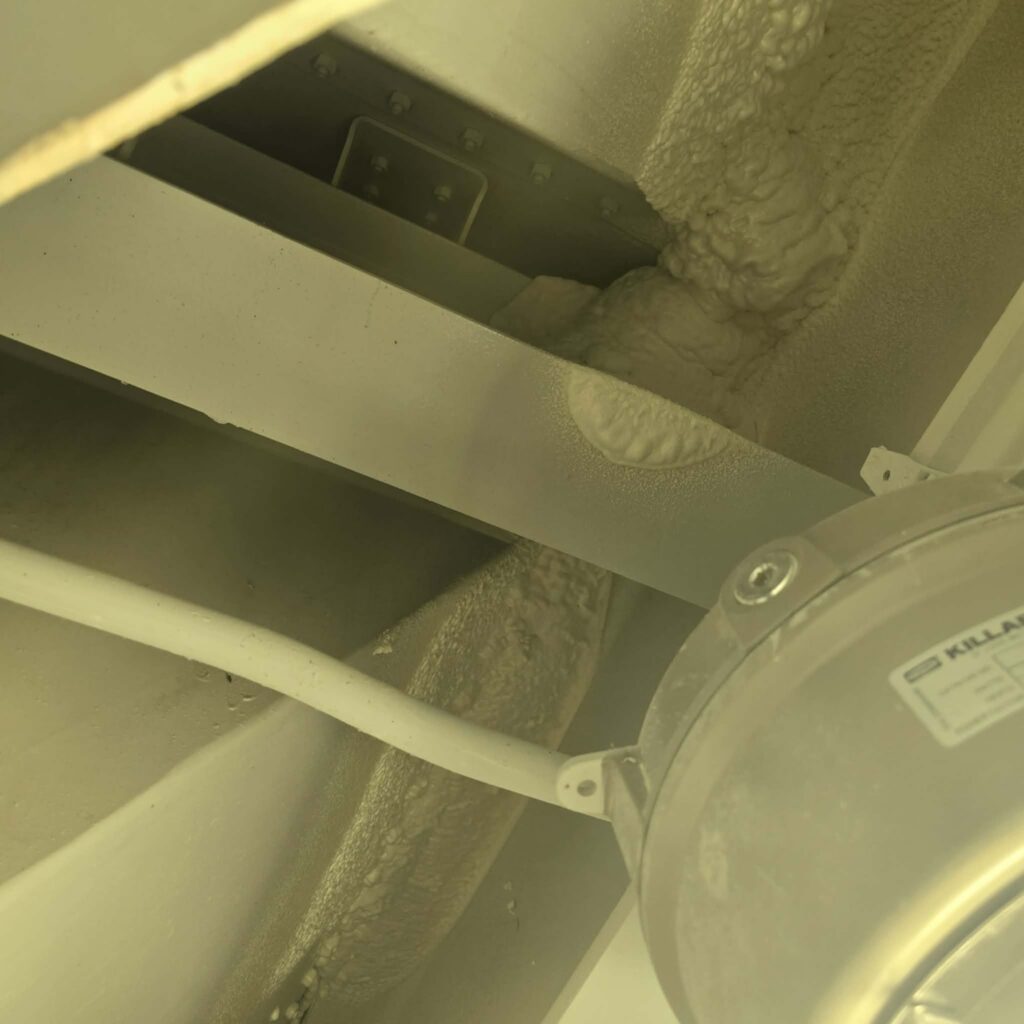
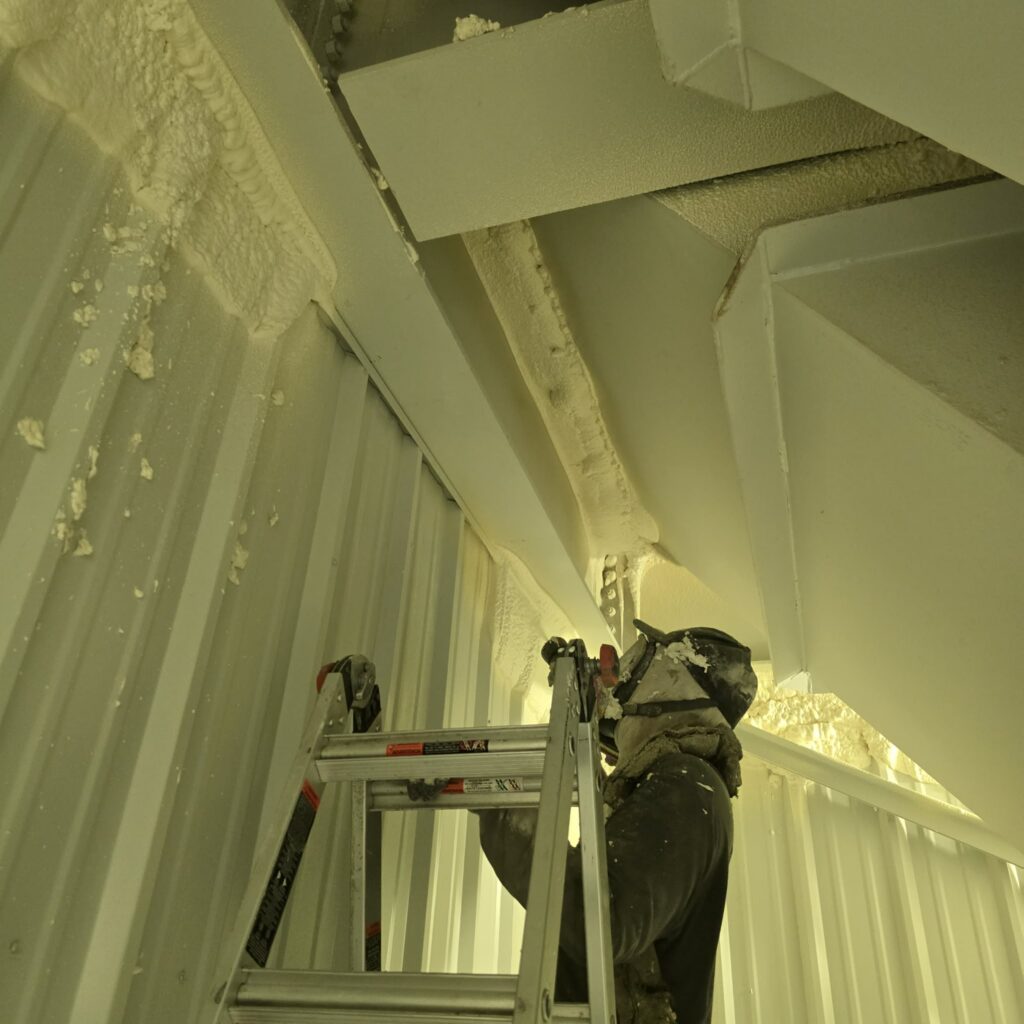
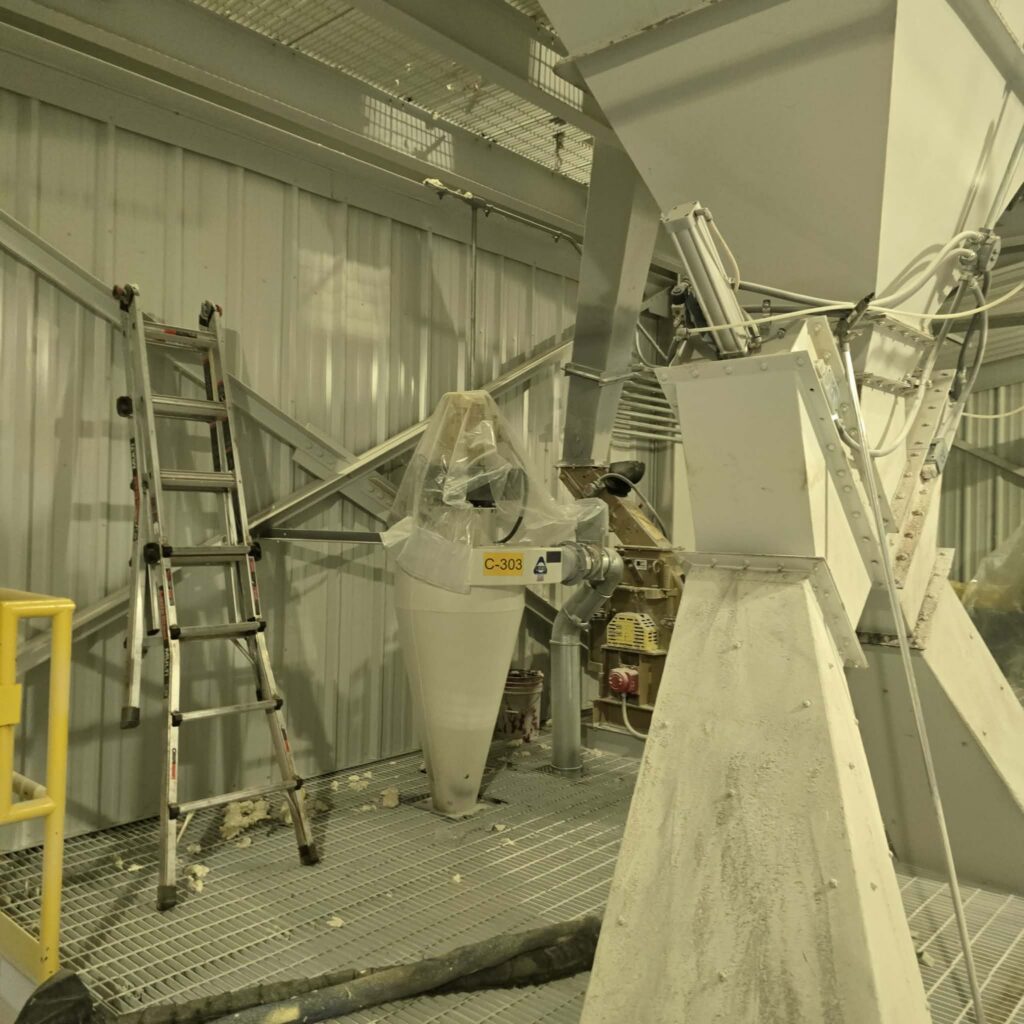
The crew protected the facility’s machinery, electrical components, railings, floors and other equipment before beginning the work. Because many of the leaks were located around structural steel, equipment openings and high sections of the building, the project required ladders, access equipment and careful coordination throughout the facility.
The team used approximately 62 gallons of closed-cell spray foam to seal as many identified holes, gaps, cracks and irregular air pathways as possible.
The project took longer than originally anticipated, but the crew stayed with it and completed the sealing work that day.
The Pressure Began to Build
After the initial air-sealing work was completed, the building reached:
0.20 inches of water column without the production equipment running
That matched the facility’s original target.
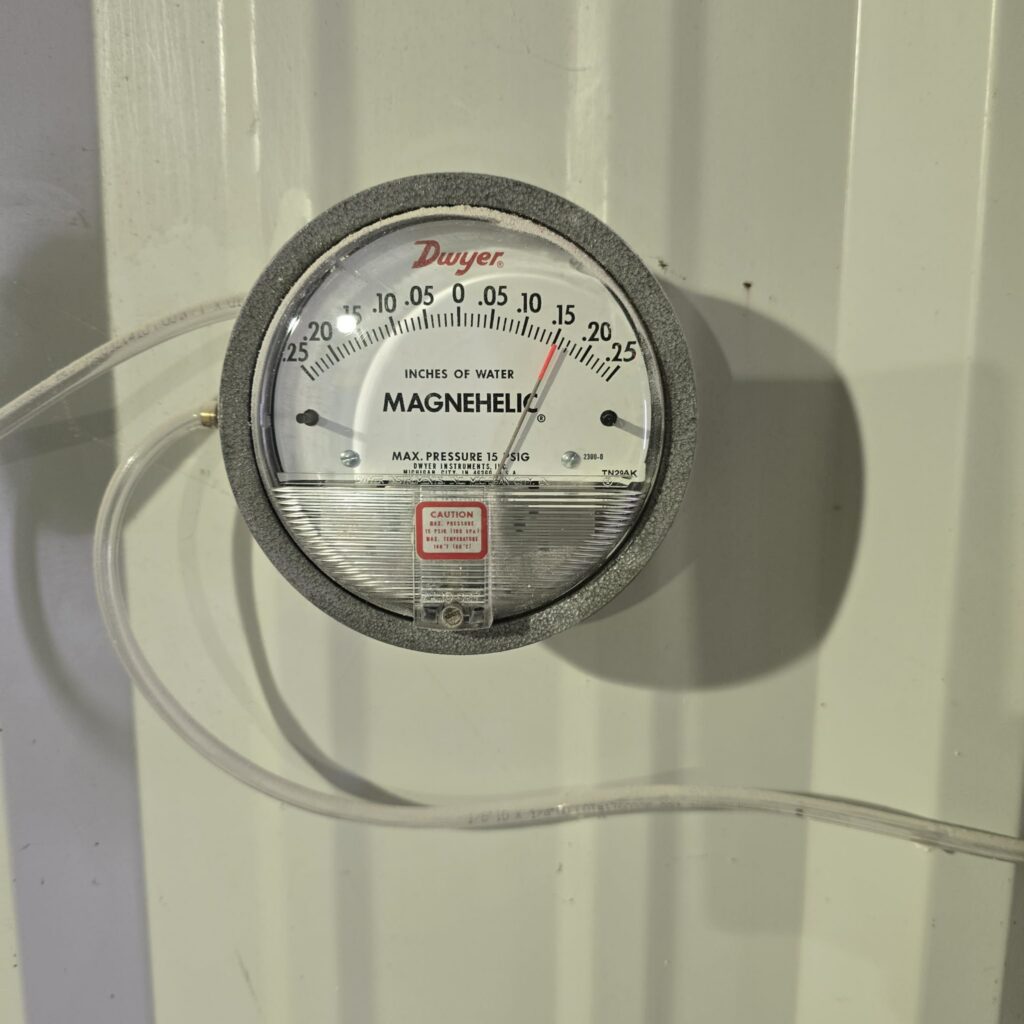
Once the machinery was back in operation, the pressure reading settled at approximately:
0.17 inches of water column during plant operation
That represented a major improvement from the original reading of zero, but the facility and project team continued working to improve the system.
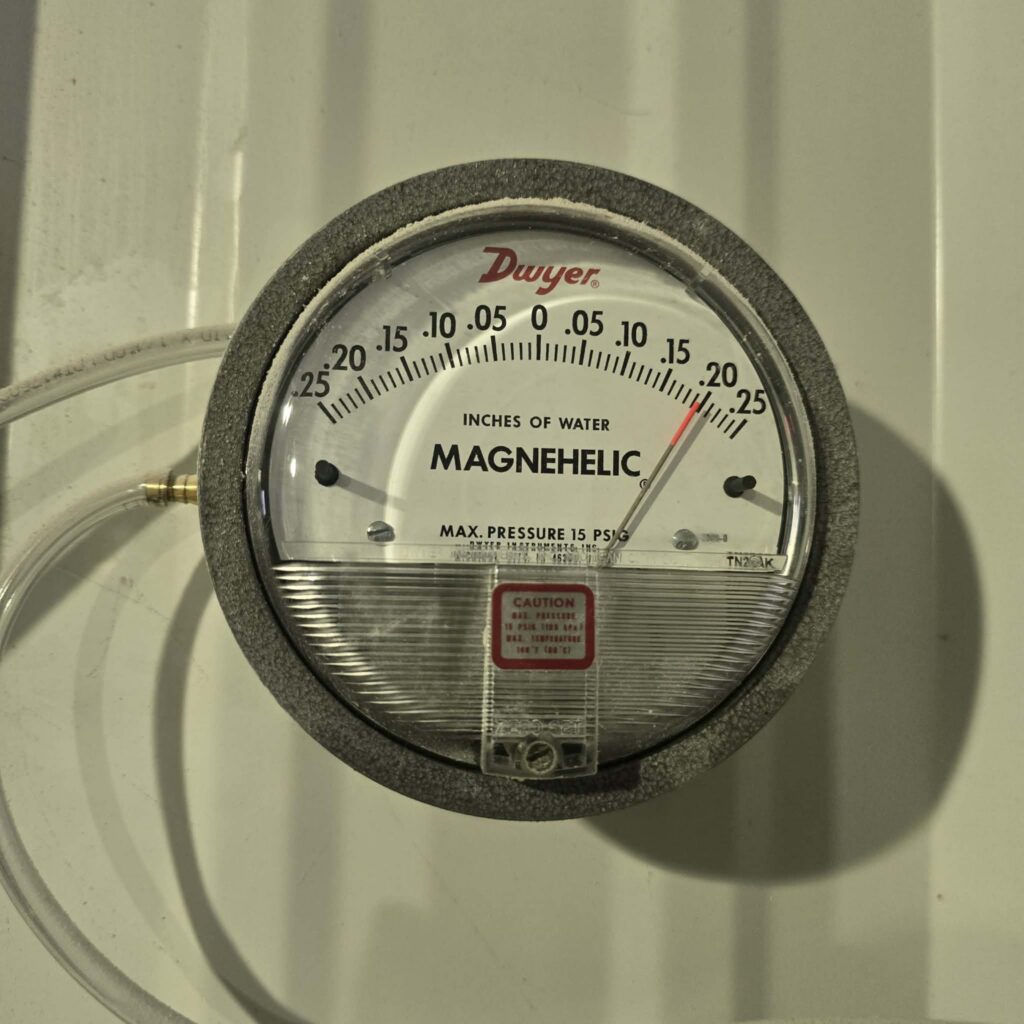
The Final Result: 0.23 and Above Target
Following the installation of a Snirt Stopper and an adjustment to a flap on the fan system, the facility’s operating pressure increased again.
The new verified reading was:
0.23 inches of water column
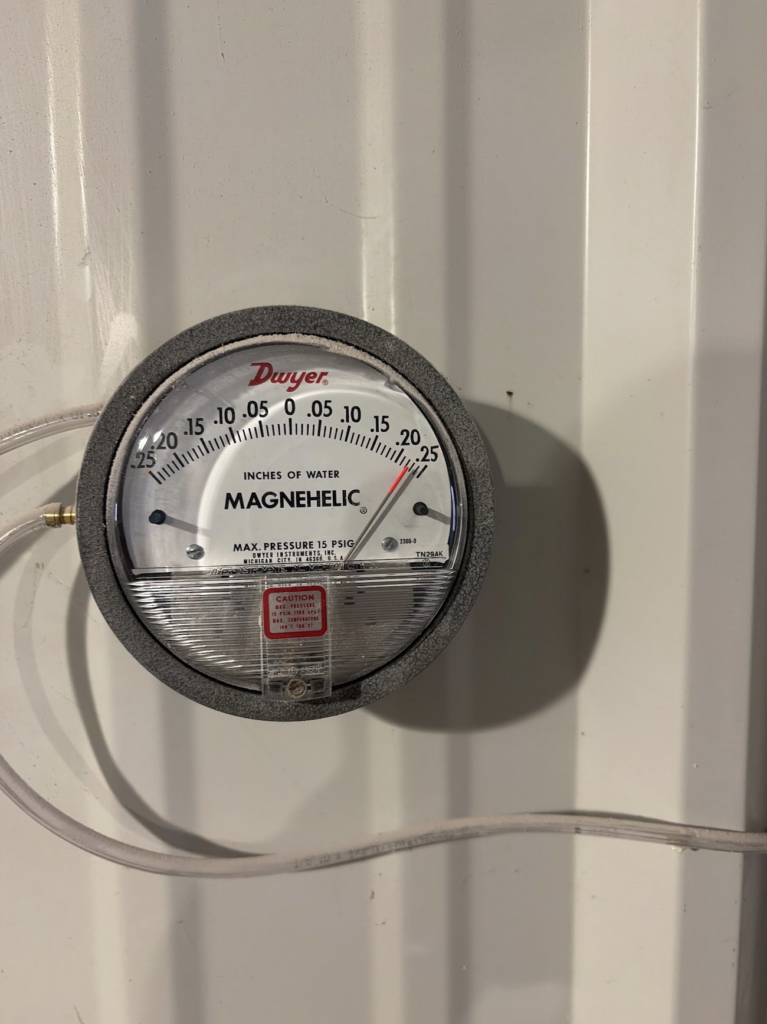
The facility is now operating above its 0.20 target.
Because the building can hold pressure more effectively, the fan should no longer need to operate at maximum speed 100% of the time. That gives the facility greater flexibility to reduce the fan speed while still maintaining the pressure it needs.
Before and After
Initial operating pressure: 0.00 in. w.c.
Pressure after air sealing with machinery off: 0.20 in. w.c.
Pressure after air sealing with machinery operating: 0.17 in. w.c.
Final operating pressure after the Snirt Stopper installation and fan adjustment: 0.23 in. w.c.
Facility target: 0.20 in. w.c.
Multiple professionals reportedly said the building could not be pressurized successfully.
Insulation HUB proved otherwise.
A Note About the Protective Coating
DC 315 intumescent coating was sold to the customer for the installed spray foam. The customer elected to handle the application internally after the spray foam installation was completed.
Does Your Industrial Building Struggle to Hold Pressure?
Large agricultural, manufacturing and industrial buildings can lose enormous amounts of air through gaps that are difficult to see from the floor.
Insulation HUB uses testing, building-science principles and targeted air sealing to identify the real problem areas and deliver measurable results.
Contact Insulation HUB to discuss an industrial air-sealing assessment for your facility.